Helm Chart Testing in Production: Layers, Tools, and a Minimum CI Pipeline

Helm Chart Testing in Production: Layers, Tools, and a Minimum CI Pipeline

When a Helm chart fails in production, the impact is immediate and visible. A misconfigured ServiceAccount, a typo in a ConfigMap key, or an untested conditional in templates can trigger incidents that cascade through your entire deployment pipeline. The irony is that most teams invest heavily in testing application code while treating Helm charts as “just configuration.”

Chart testing is fundamental for production-quality Helm deployments. For comprehensive coverage of testing along with all other Helm best practices, visit our complete Helm guide.

Helm charts are infrastructure code. They define how your applications run, scale, and integrate with the cluster. Treating them with less rigor than your application logic is a risk most production environments cannot afford.

The Real Cost of Untested Charts

In late 2024, a medium-sized SaaS company experienced a 4-hour outage because a chart update introduced a breaking change in RBAC permissions. The chart had been tested locally with helm install --dry-run, but the dry-run validation doesn’t interact with the API server’s RBAC layer. The deployment succeeded syntactically but failed operationally.

The incident revealed three gaps in their workflow:

  1. No schema validation against the target Kubernetes version
  2. No integration tests in a live cluster
  3. No policy enforcement for security baselines

These gaps are common. According to a 2024 CNCF survey on GitOps practices, fewer than 40% of organizations systematically test Helm charts before production deployment.

The problem is not a lack of tools—it’s understanding which layer each tool addresses.

Testing Layers: What Each Level Validates

Helm chart testing is not a single operation. It requires validation at multiple layers, each catching different classes of errors.

Layer 1: Syntax and Structure Validation

What it catches: Malformed YAML, invalid chart structure, missing required fields

Tools:

  • helm lint: Built-in, minimal validation following Helm best practices
  • yamllint: Strict YAML formatting rules

Example failure caught:

# Invalid indentation breaks the chart
resources:
  limits:
      cpu: "500m"
    memory: "512Mi"  # Incorrect indentation

Limitation: Does not validate whether the rendered manifests are valid Kubernetes objects.

Layer 2: Schema Validation

What it catches: Manifests that would be rejected by the Kubernetes API

Primary tool: kubeconform

Kubeconform is the actively maintained successor to the deprecated kubeval. It validates against OpenAPI schemas for specific Kubernetes versions and can include custom CRDs.

Project Profile:

  • Maintenance: Active, community-driven
  • Strengths: CRD support, multi-version validation, fast execution
  • Why it matters: helm lint validates chart structure, but not if rendered manifests match Kubernetes schemas

Example failure caught:

apiVersion: apps/v1
kind: Deployment
spec:
  replicas: 2
  template:
    metadata:
      labels:
        app: myapp
    spec:
      containers:
      - name: app
        image: nginx:latest
# Missing required field: spec.selector

Configuration example:

helm template my-chart . | kubeconform \
  -kubernetes-version 1.30.0 \
  -schema-location default \
  -schema-location 'https://raw.githubusercontent.com/datreeio/CRDs-catalog/main/{{.Group}}/{{.ResourceKind}}_{{.ResourceAPIVersion}}.json' \
  -summary

Example CI integration:

#!/bin/bash
set -e

KUBE_VERSION="1.30.0"

echo "Rendering chart..."
helm template my-release ./charts/my-chart > manifests.yaml

echo "Validating against Kubernetes $KUBE_VERSION..."
kubeconform \
  -kubernetes-version "$KUBE_VERSION" \
  -schema-location default \
  -summary \
  -output json \
  manifests.yaml | jq -e '.summary.invalid == 0'

Alternative: kubectl --dry-run=server (requires cluster access, validates against actual API server)

Layer 3: Unit Testing

What it catches: Logic errors in templates, incorrect conditionals, wrong value interpolation

Unit tests validate that given a set of input values, the chart produces the expected manifests. This is where template logic is verified before reaching a cluster.

Primary tool: helm-unittest

helm-unittest is the most widely adopted unit testing framework for Helm charts.

Project Profile:

  • GitHub: 3.3k+ stars, ~100 contributors
  • Maintenance: Active (releases every 2-3 months)
  • Primary maintainer: Quentin Machu (originally @QubitProducts, now independent)
  • Commercial backing: None
  • Bus Factor: Medium-High (no institutional backing, but consistent community engagement)

Strengths:

  • Fast execution (no cluster required)
  • Familiar test syntax (similar to Jest/Mocha)
  • Snapshot testing support
  • Good documentation

Limitations:

  • Doesn’t validate runtime behavior
  • Cannot test interactions with admission controllers
  • No validation against actual Kubernetes API

Example test scenario:

# tests/deployment_test.yaml
suite: test deployment
templates:
  - deployment.yaml
tests:
  - it: should set resource limits when provided
    set:
      resources.limits.cpu: "1000m"
      resources.limits.memory: "1Gi"
    asserts:
      - equal:
          path: spec.template.spec.containers[0].resources.limits.cpu
          value: "1000m"
      - equal:
          path: spec.template.spec.containers[0].resources.limits.memory
          value: "1Gi"

  - it: should not create HPA when autoscaling disabled
    set:
      autoscaling.enabled: false
    template: hpa.yaml
    asserts:
      - hasDocuments:
          count: 0

Alternative: Terratest (Helm module)

Terratest is a Go-based testing framework from Gruntwork that includes first-class Helm support. Unlike helm-unittest, Terratest deploys charts to real clusters and allows programmatic assertions in Go.

Example Terratest test:

func TestHelmChartDeployment(t *testing.T) {
    kubectlOptions := k8s.NewKubectlOptions("", "", "default")
    options := &helm.Options{
        KubectlOptions: kubectlOptions,
        SetValues: map[string]string{
            "replicaCount": "3",
        },
    }
    
    defer helm.Delete(t, options, "my-release", true)
    helm.Install(t, options, "../charts/my-chart", "my-release")
    
    k8s.WaitUntilNumPodsCreated(t, kubectlOptions, metav1.ListOptions{
        LabelSelector: "app=my-app",
    }, 3, 30, 10*time.Second)
}

When to use Terratest vs helm-unittest:

  • Use helm-unittest for fast, template-focused validation in CI
  • Use Terratest when you need full integration testing with Go flexibility

Layer 4: Integration Testing

What it catches: Runtime failures, resource conflicts, actual Kubernetes behavior

Integration tests deploy the chart to a real (or ephemeral) cluster and verify it works end-to-end.

Primary tool: chart-testing (ct)

chart-testing is the official Helm project for testing charts in live clusters.

Project Profile:

  • Ownership: Official Helm project (CNCF)
  • Maintainers: Helm team (contributors from Microsoft, IBM, Google)
  • Governance: CNCF-backed with public roadmap
  • LTS: Aligned with Helm release cycle
  • Bus Factor: Low (institutional backing from CNCF provides strong long-term guarantees)

Strengths:

  • De facto standard for public Helm charts
  • Built-in upgrade testing (validates migrations)
  • Detects which charts changed in a PR (efficient for monorepos)
  • Integration with GitHub Actions via official action

Limitations:

  • Requires a live Kubernetes cluster
  • Initial setup more complex than unit testing
  • Does not include security scanning

What ct validates:

  • Chart installs successfully
  • Upgrades work without breaking state
  • Linting passes
  • Version constraints are respected

Example ct configuration:

# ct.yaml
target-branch: main
chart-dirs:
  - charts
chart-repos:
  - bitnami=https://charts.bitnami.com/bitnami
helm-extra-args: --timeout 600s
check-version-increment: true

Typical GitHub Actions workflow:

name: Lint and Test Charts

on: pull_request

jobs:
  lint-test:
    runs-on: ubuntu-latest
    steps:
      - name: Checkout
        uses: actions/checkout@v3
        with:
          fetch-depth: 0

      - name: Set up Helm
        uses: azure/setup-helm@v3

      - name: Set up Python
        uses: actions/setup-python@v4
        with:
          python-version: '3.11'

      - name: Set up chart-testing
        uses: helm/chart-testing-action@v2

      - name: Run chart-testing (lint)
        run: ct lint --config ct.yaml

      - name: Create kind cluster
        uses: helm/kind-action@v1

      - name: Run chart-testing (install)
        run: ct install --config ct.yaml

When ct is essential:

  • Public chart repositories (expected by community)
  • Charts with complex upgrade paths
  • Multi-chart repositories with CI optimization needs

Layer 5: Security and Policy Validation

What it catches: Security misconfigurations, policy violations, compliance issues

This layer prevents deploying charts that pass functional tests but violate organizational security baselines or contain vulnerabilities.

Policy Enforcement: Conftest (Open Policy Agent)

Conftest is the CLI interface to Open Policy Agent for policy-as-code validation.

Project Profile:

  • Parent: Open Policy Agent (CNCF Graduated Project)
  • Governance: Strong CNCF backing, multi-vendor support
  • Production adoption: Netflix, Pinterest, Goldman Sachs
  • Bus Factor: Low (graduated CNCF project with multi-vendor backing)

Strengths:

  • Policies written in Rego (reusable, composable)
  • Works with any YAML/JSON input (not Helm-specific)
  • Can enforce organizational standards programmatically
  • Integration with admission controllers (Gatekeeper)

Limitations:

  • Rego has a learning curve
  • Does not replace functional testing

Example Conftest policy:

# policy/security.rego
package main

import future.keywords.contains
import future.keywords.if
import future.keywords.in

deny[msg] {
  input.kind == "Deployment"
  container := input.spec.template.spec.containers[_]
  not container.resources.limits.memory
  msg := sprintf("Container '%s' must define memory limits", [container.name])
}

deny[msg] {
  input.kind == "Deployment"
  container := input.spec.template.spec.containers[_]
  not container.resources.limits.cpu
  msg := sprintf("Container '%s' must define CPU limits", [container.name])
}

Running the validation:

helm template my-chart . | conftest test -p policy/ -

Alternative: Kyverno

Kyverno offers policy enforcement using native Kubernetes manifests instead of Rego. Policies are written in YAML and can validate, mutate, or generate resources.

Example Kyverno policy:

apiVersion: kyverno.io/v1
kind: ClusterPolicy
metadata:
  name: require-resource-limits
spec:
  validationFailureAction: Enforce
  rules:
  - name: check-container-limits
    match:
      resources:
        kinds:
        - Pod
    validate:
      message: "All containers must have CPU and memory limits"
      pattern:
        spec:
          containers:
          - resources:
              limits:
                memory: "?*"
                cpu: "?*"

Conftest vs Kyverno:

  • Conftest: Policies run in CI, flexible for any YAML
  • Kyverno: Runtime enforcement in-cluster, Kubernetes-native

Both can coexist: Conftest in CI for early feedback, Kyverno in cluster for runtime enforcement.

Vulnerability Scanning: Trivy

Trivy by Aqua Security provides comprehensive security scanning for Helm charts.

Project Profile:

  • Maintainer: Aqua Security (commercial backing with open-source core)
  • Scope: Vulnerability scanning + misconfiguration detection
  • Helm integration: Official trivy helm command
  • Bus Factor: Low (commercial backing + strong open-source adoption)

What Trivy scans in Helm charts:

  1. Vulnerabilities in referenced container images
  2. Misconfigurations (similar to Conftest but pre-built rules)
  3. Secrets accidentally committed in templates

Example scan:

trivy helm ./charts/my-chart --severity HIGH,CRITICAL --exit-code 1

Sample output:

myapp/templates/deployment.yaml (helm)
====================================

Tests: 12 (SUCCESSES: 10, FAILURES: 2)
Failures: 2 (HIGH: 1, CRITICAL: 1)

HIGH: Container 'app' of Deployment 'myapp' should set 'securityContext.runAsNonRoot' to true
════════════════════════════════════════════════════════════════════════════════════════════════
Ensure containers run as non-root users

See https://kubernetes.io/docs/concepts/security/pod-security-standards/
────────────────────────────────────────────────────────────────────────────────────────────────
 myapp/templates/deployment.yaml:42

Commercial support:
Aqua Security offers Trivy Enterprise with advanced features (centralized scanning, compliance reporting). For most teams, the open-source version is sufficient.

Other Security Tools

Polaris (Fairwinds)

Polaris scores charts based on security and reliability best practices. Unlike enforcement tools, it provides a health score and actionable recommendations.

Use case: Dashboard for chart quality across a platform

Checkov (Bridgecrew/Palo Alto)

Similar to Trivy but with a broader IaC focus (Terraform, CloudFormation, Kubernetes, Helm). Pre-built policies for compliance frameworks (CIS, PCI-DSS).

When to use Checkov:

  • Multi-IaC environment (not just Helm)
  • Compliance-driven validation requirements

Enterprise Selection Criteria

Bus Factor and Long-Term Viability

For production infrastructure, tool sustainability matters as much as features. Community support channels like Helm CNCF Slack (#helm-users, #helm-dev) and CNCF TAG Security provide valuable insights into which projects have active maintainer communities.

Questions to ask:

  • Is the project backed by a foundation (CNCF, Linux Foundation)?
  • Are multiple companies contributing?
  • Is the project used in production by recognizable organizations?
  • Is there a public roadmap?

Risk Classification:

Tool Governance Bus Factor Notes
chart-testing CNCF Low Helm official project
Conftest/OPA CNCF Graduated Low Multi-vendor backing
Trivy Aqua Security Low Commercial backing + OSS
kubeconform Community Medium Active, but single maintainer
helm-unittest Community Medium-High No institutional backing
Polaris Fairwinds Medium Company-sponsored OSS

Kubernetes Version Compatibility

Tools must explicitly support the Kubernetes versions you run in production.

Red flags:

  • No documented compatibility matrix
  • Hard-coded dependencies on old K8s versions
  • No testing against multiple K8s versions in CI

Example compatibility check:

# Does the tool support your K8s version?
kubeconform --help | grep -A5 "kubernetes-version"

For tools like ct, always verify they test against a matrix of Kubernetes versions in their own CI.

Commercial Support Options

When commercial support matters:

  • Regulatory compliance requirements (SOC2, HIPAA, etc.)
  • Limited internal expertise
  • SLA-driven operations

Available options:

  • Trivy: Aqua Security offers Trivy Enterprise
  • OPA/Conftest: Styra provides OPA Enterprise
  • Terratest: Gruntwork offers consulting and premium modules

Most teams don’t need commercial support for chart testing specifically, but it’s valuable in regulated industries where audits require vendor SLAs.

Security Scanner Integration

For enterprise pipelines, chart testing tools should integrate cleanly with:

  • SIEM/SOAR platforms
  • CI/CD notification systems
  • Security dashboards (e.g., Grafana, Datadog)

Required features:

  • Structured output formats (JSON, SARIF)
  • Exit codes for CI failure
  • Support for custom policies
  • Webhook or API for event streaming

Example: Integrating Trivy with SIEM

# .github/workflows/security.yaml
- name: Run Trivy scan
  run: trivy helm ./charts --format json --output trivy-results.json

- name: Send to SIEM
  run: |
    curl -X POST https://siem.company.com/api/events \
      -H "Content-Type: application/json" \
      -d @trivy-results.json

Testing Pipeline Architecture

A production-grade Helm chart pipeline combines multiple layers:

Pipeline efficiency principles:

  1. Fail fast: syntax and schema errors should never reach integration tests
  2. Parallel execution where possible (unit tests + security scans)
  3. Cache ephemeral cluster images to reduce setup time
  4. Skip unchanged charts (ct built-in change detection)

Decision Matrix: When to Use What

Scenario 1: Small Team / Early-Stage Startup

Requirements: Minimal overhead, fast iteration, reasonable safety

Recommended Stack:

Linting:      helm lint + yamllint
Validation:   kubeconform
Security:     trivy helm

Optional: helm-unittest (if template logic becomes complex)

Rationale: Zero-dependency baseline that catches 80% of issues without operational complexity.

Scenario 2: Enterprise with Compliance Requirements

Requirements: Auditable, comprehensive validation, commercial support available

Recommended Stack:

Linting:      helm lint + yamllint
Validation:   kubeconform
Unit Tests:   helm-unittest
Security:     Trivy Enterprise + Conftest (custom policies)
Integration:  chart-testing (ct)
Runtime:      Kyverno (admission control)

Optional: Terratest for complex upgrade scenarios

Rationale: Multi-layer defense with both pre-deployment and runtime enforcement. Commercial support available for security components.

Scenario 3: Multi-Tenant Internal Platform

Requirements: Prevent bad charts from affecting other tenants, enforce standards at scale

Recommended Stack:

CI Pipeline:
  • helm lint → kubeconform → helm-unittest → ct
  • Conftest (enforce resource quotas, namespaces, network policies)
  • Trivy (block critical vulnerabilities)

Runtime:
  • Kyverno or Gatekeeper (enforce policies at admission)
  • ResourceQuotas per namespace
  • NetworkPolicies by default

Additional tooling:

  • Polaris dashboard for chart quality scoring
  • Custom admission webhooks for platform-specific rules

Rationale: Multi-tenant environments cannot tolerate “soft” validation. Runtime enforcement is mandatory.

Scenario 4: Open Source Public Charts

Requirements: Community trust, transparent testing, broad compatibility

Recommended Stack:

Must-have:
  • chart-testing (expected standard)
  • Public CI (GitHub Actions with full logs)
  • Test against multiple K8s versions

Nice-to-have:
  • helm-unittest with high coverage
  • Automated changelog generation
  • Example values for common scenarios

Rationale: Public charts are judged by testing transparency. Missing ct is a red flag for potential users.

The Minimum Viable Testing Stack

For any environment deploying Helm charts to production, this is the baseline:

Layer 1: Pre-Commit (Developer Laptop)

helm lint charts/my-chart
yamllint charts/my-chart

Layer 2: CI Pipeline (Automated on PR)

# Fast validation
helm template my-chart ./charts/my-chart | kubeconform \
  -kubernetes-version 1.30.0 \
  -summary

# Security baseline
trivy helm ./charts/my-chart --exit-code 1 --severity CRITICAL,HIGH

Layer 3: Pre-Production (Staging Environment)

# Integration test with real cluster
ct install --config ct.yaml --charts charts/my-chart

Time investment:

  • Initial setup: 4-8 hours
  • Per-PR overhead: 3-5 minutes
  • Maintenance: ~1 hour/month

ROI calculation:

Average production incident caused by untested chart:

  • Detection: 15 minutes
  • Triage: 30 minutes
  • Rollback: 20 minutes
  • Post-mortem: 1 hour
  • Total: ~2.5 hours of engineering time

If chart testing prevents even one incident per quarter, it pays for itself in the first month.

Common Anti-Patterns to Avoid

Anti-Pattern 1: Only using --dry-run

helm install --dry-run validates syntax but skips:

  • Admission controller logic
  • RBAC validation
  • Actual resource creation

Better: Combine dry-run with kubeconform and at least one integration test.

Anti-Pattern 2: Testing only in production-like clusters

“We test in staging, which is identical to production.”

Problem: Staging clusters rarely match production exactly (node counts, storage classes, network policies). Integration tests should run in isolated, ephemeral environments.

Anti-Pattern 3: Security scanning without enforcement

Running trivy helm without failing the build on critical findings is theater.

Better: Set --exit-code 1 and enforce in CI.

Anti-Pattern 4: Ignoring upgrade paths

Most chart failures happen during upgrades, not initial installs. Chart-testing addresses this with ct install --upgrade.

Conclusion: Testing is Infrastructure Maturity

The gap between teams that test Helm charts and those that don’t is not about tooling availability—it’s about treating infrastructure code with the same discipline as application code.

The cost of testing is measured in minutes per PR. The cost of not testing is measured in hours of production incidents, eroded trust in automation, and teams reverting to manual deployments because “Helm is too risky.”

The testing stack you choose matters less than the fact that you have one. Start with the minimal viable stack (lint + schema + security), run it consistently, and expand as your charts become more complex.

By implementing a structured testing pipeline, you catch 95% of chart issues before they reach production. The remaining 5% are edge cases that require production observability, not more testing layers.

Helm chart testing is not about achieving perfection—it’s about eliminating the preventable failures that undermine confidence in your deployment pipeline.

Frequently Asked Questions (FAQ)

What is Helm chart testing and why is it important in production?

Helm chart testing ensures that Kubernetes manifests generated from Helm templates are syntactically correct, schema-compliant, secure, and function correctly when deployed. In production, untested charts can cause outages, security incidents, or failed upgrades, even if application code itself is stable.

Is helm lint enough to validate a Helm chart?

No. helm lint only validates chart structure and basic best practices. It does not validate rendered manifests against Kubernetes API schemas, test template logic, or verify runtime behavior. Production-grade testing requires additional layers such as schema validation, unit tests, and integration tests.

What is the difference between Helm unit tests and integration tests?

Unit tests (e.g., using helm-unittest) validate template logic by asserting expected output for given input values without deploying anything. Integration tests (e.g., using chart-testing or Terratest) deploy charts to a real Kubernetes cluster and validate runtime behavior, upgrades, and interactions with the API server.

Which tools are recommended for validating Helm charts against Kubernetes schemas?

The most commonly recommended tool is kubeconform, which validates rendered manifests against Kubernetes OpenAPI schemas for specific Kubernetes versions and supports CRDs. An alternative is kubectl --dry-run=server, which validates against a live API server.

How can Helm chart testing prevent production outages?

Testing catches common failure modes before deployment, such as missing selectors in Deployments, invalid RBAC permissions, incorrect conditionals, or incompatible API versions. Many production outages originate from configuration and chart logic errors rather than application bugs.

What is the role of security scanning in Helm chart testing?

Security scanning detects misconfigurations, policy violations, and vulnerabilities that functional tests may miss. Tools like Trivy and Conftest (OPA) help enforce security baselines, prevent unsafe defaults, and block deployments that violate organizational or compliance requirements.

Is chart-testing (ct) required for private Helm charts?

While not strictly required, chart-testing is highly recommended for any chart deployed to production. It is considered the de facto standard for integration testing, especially for charts with upgrades, multiple dependencies, or shared cluster environments.

What is the minimum viable Helm testing pipeline for CI?

At a minimum, a production-ready pipeline should include:
helm lint for structural validation
kubeconform for schema validation
trivy helm for security scanning
Integration tests can be added as charts grow in complexity or criticality.
Helm Drivers Explained: Secrets, ConfigMaps, and State Storage in Helm

Helm Drivers Explained: Secrets, ConfigMaps, and State Storage in Helm

When working seriously with Helm in production environments, one of the less-discussed but highly impactful topics is how Helm stores and manages release state. This is where Helm drivers come into play. Understanding Helm drivers is not just an academic exercise; it directly affects security, scalability, troubleshooting, and even disaster recovery strategies.

Understanding Helm drivers is critical for production deployments. This is just one of many essential topics covered in our comprehensive Helm package management guide.

What Helm Drivers Are and How They Are Configured

A Helm driver defines the backend storage mechanism Helm uses to persist release information such as manifests, values, and revision history. Every Helm release has state, and that state must live somewhere. The driver determines where and how this data is stored.

Helm drivers are configured using the HELM_DRIVER environment variable. If the variable is not explicitly set, Helm defaults to using Kubernetes Secrets.

export HELM_DRIVER=secrets

This simple configuration choice can have deep operational consequences, especially in regulated environments or large-scale clusters.

Available Helm Drivers

Secrets Driver (Default)

The secrets driver stores release information as Kubernetes Secrets in the target namespace. This has been the default driver since Helm 3 was introduced.

Secrets are base64-encoded and can be encrypted at rest if Kubernetes encryption at rest is enabled. This makes the driver suitable for clusters with moderate security requirements without additional configuration.

ConfigMaps Driver

The configmaps driver stores Helm release state as Kubernetes ConfigMaps. Functionally, it behaves very similarly to the secrets driver but without any form of implicit confidentiality.

export HELM_DRIVER=configmaps

This driver is often used in development or troubleshooting scenarios where human readability is preferred.

Memory Driver

The memory driver stores release information only in memory. Once the Helm process exits, all state is lost.

export HELM_DRIVER=memory

This driver is rarely used outside of testing, CI pipelines, or ephemeral validation workflows.

Evolution of Helm Drivers

Helm drivers were significantly reworked with the release of Helm 3 in late 2019. Helm 2 relied on Tiller and ConfigMaps by default, which introduced security and operational complexity. Helm 3 removed Tiller entirely and introduced pluggable storage backends with Secrets as the secure default.

Since then, improvements have focused on performance, stability, and better error handling rather than introducing new drivers. The core abstraction has remained intentionally small to avoid fragmentation.

Practical Use Cases and When to Use Each Driver

In production Kubernetes clusters, the secrets driver is almost always the right choice. It integrates naturally with RBAC, supports encryption at rest, and aligns with Kubernetes-native security models.

ConfigMaps can be useful when debugging failed upgrades or learning Helm internals, as the stored data is easier to inspect. However, it should be avoided in environments handling sensitive values.

The memory driver shines in CI/CD pipelines where chart validation or rendering is needed without polluting a cluster with state.

Practical Examples

Switching drivers dynamically can be useful when inspecting a release:

HELM_DRIVER=configmaps helm get manifest my-release

Or running a dry validation in CI:

HELM_DRIVER=memory helm upgrade --install test ./chart --dry-run

Final Thoughts

Helm drivers are rarely discussed, yet they influence how reliable, secure, and observable your Helm workflows are. Treating the choice of driver as a deliberate architectural decision rather than a default setting is one of those small details that differentiate mature DevOps practices from ad-hoc automation.

Helm 4.0 Features, Breaking Changes & Migration Guide 2025

Helm 4.0 Features, Breaking Changes & Migration Guide 2025

Helm is one of the main utilities within the Kubernetes ecosystem, and therefore the release of a new major version, such as Helm 4.0, is something to consider because it is undoubtedly something that will need to be analyzed, evaluated, and managed in the coming months.

Helm 4.0 represents a major milestone in Kubernetes package management. For a complete understanding of Helm from basics to advanced features, explore our .

Due to this, we will see many comments and articles around this topic, so we will try to shed some light.

Helm 4.0 Key Features and Improvements

According to the project itself in its announcement, Helm 4 introduces three major blocks of changes: new plugin system, better integration with Kubernetes ** and internal modernization of SDK and performance**.

New Plugin System (includes WebAssembly)

The plugin system has been completely redesigned, with a special focus on security through the introduction of a new WebAssembly runtime that, while optional, is recommended as it runs in a “sandbox” mode that offers limits and guarantees from a security perspective.

In any case, there is no need to worry excessively, as the “classic” plugins continue to work, but the message is clear: for security and extensibility, the direction is Wasm.

Server-Side Apply and Better Integration with Other Controllers

From this version, Helm 4 supports Server-Side Apply (SSA) through the --server-side flag, which has already become stable since Kubernetes version v1.22 and allows updates on objects to be handled server-side to avoid conflicts between different controllers managing the same resources.

It also incorporates integration with kstatus to ensure the state of a component in a more reliable way than what currently happens with the use of the --wait parameter.

Other Additional Improvements

Additionally, there is another list of improvements that, while of lesser scope, are important qualitative leaps, such as the following:

  • Installation by digest in OCI registries: (helm install myapp oci://...@sha256:<digest>)
  • Multi-document values: you can pass multiple YAML values in a single multi-doc file, facilitating complex environments/overlays.
  • New --set-json argument that allows for easily passing complex structures compared to the current solution using the --set parameter

Why a Major (v4) and Not Another Minor of 3.x?

As explained in the official release post, there were features that the team could not introduce in v3 without breaking public SDK APIs and internal architecture:

  • Strong change in the plugin system (WebAssembly, new types, deep integration with the core).
  • Restructuring of Go packages and establishment of a stable SDK at helm.sh/helm/v4, code-incompatible with v3.
  • Introduction and future evolution of Charts v3, which require the SDK to support multiple versions of chart APIs.

With all this, continuing in the 3.x branch would have violated SemVer: the major number change is basically “paying” the accumulated technical debt to be able to move forward.

Additionally, a new evolution of the charts is expected in the future, moving from v2 to a future v3 that is not yet fully defined, and currently, v2 charts run correctly in this new version.

Is Helm 4.0 Migration Required?

The short answer is: yes. And possibly the long answer is: yes, and quickly. In the official Helm 4 announcement, they specify the support schedule for Helm 3:

  • Helm 3 bug fixes until July 8, 2026.
  • Helm 3 security fixes until November 11, 2026.
  • No new features will be backported to Helm 3 during this period; only Kubernetes client libraries will be updated to support new K8s versions.

Practical translation:

  • Organizations have approximately 1 year to plan a smooth Helm 4.0 migration with continued bug support for Helm 3.
  • After November 2026, continuing to use Helm 3 will become increasingly risky from a security and compatibility standpoint.

Best Practices for Migration

To carry out the migration, it is important to remember that it is perfectly possible and feasible to have both versions installed on the same machine or agent, so a “gradual” migration can be done to ensure that the end of support for version v3 is reached with everything migrated correctly, and for that, the following steps are recommended:

  • Conduct an analysis of all Helm commands and usage from the perspective of integration pipelines, upgrade scripts, or even the import of Helm client libraries in Helm-based developments.
  • Especially carefully review all uses of --post-renderer, helm registry login, --atomic, --force.
  • After the analysis, start testing Helm 4 first in non-production environments, reusing the same charts and values, reverting to Helm 3 if a problem is detected until it is resolved.
  • If you have critical plugins, explicitly test them with Helm 4 before making the global change.

What are the main new features in Helm 4.0?

Helm 4.0 introduces three major improvements: a redesigned plugin system with WebAssembly support for enhanced security, Server-Side Apply (SSA) integration for better conflict resolution, and internal SDK modernization for improved performance. Additional features include OCI digest installation and multi-document values support.

When does Helm 3 support end?

Helm 3 bug fixes end July 8, 2026 and security fixes end November 11, 2026. No new features will be backported to Helm 3. Organizations should plan migration to Helm 4.0 before November 2026 to avoid security and compatibility risks.

Are Helm 3 charts compatible with Helm 4.0?

Yes, Helm Chart API v2 charts work correctly with Helm 4.0. However, the Go SDK has breaking changes, so applications using Helm libraries need code updates. The CLI commands remain largely compatible for most use cases.

Can I run Helm 3 and Helm 4 simultaneously?

Yes, both versions can be installed on the same machine, enabling gradual migration strategies. This allows teams to test Helm 4.0 in non-production environments while maintaining Helm 3 for critical workloads during the transition period.

What should I test before migrating to Helm 4.0?

Focus on testing critical plugins, post-renderers, and specific flags like --atomic, --force, and helm registry login. Test all charts and values in non-production environments first, and review any custom integrations using Helm SDK libraries.

What is Server-Side Apply in Helm 4.0?

Server-Side Apply (SSA) is enabled with the --server-side flag and handles resource updates on the Kubernetes API server side. This prevents conflicts between different controllers managing the same resources and has been stable since Kubernetes v1.22.

Helm v3.17 Take Ownership Flag: Fix Release Conflicts

Helm v3.17 Take Ownership Flag: Fix Release Conflicts

Helm has long been the standard for managing Kubernetes applications using packaged charts, bringing a level of reproducibility and automation to the deployment process. However, some operational tasks, such as renaming a release or migrating objects between charts, have traditionally required cumbersome workarounds. With the introduction of the --take-ownership flag in Helm v3.17 (released in January 2025), a long-standing pain point is finally addressed—at least partially.

The take-ownership feature represents the continuing evolution of Helm. Learn about this and other cutting-edge capabilities in our Helm Charts Package Management Guide

In this post, we will explore:

  • What the --take-ownership flag does
  • Why it was needed
  • The caveats and limitations
  • Real-world use cases where it helps
  • When not to use it

Understanding Helm Release Ownership and Object Management

When Helm installs or upgrades a chart, it injects metadata—labels and annotations—into every managed Kubernetes object. These include:

app.kubernetes.io/managed-by: Helm
meta.helm.sh/release-name: my-release
meta.helm.sh/release-namespace: default

This metadata serves an important role: Helm uses it to track and manage resources associated with each release. As a safeguard, Helm does not allow another release to modify objects it does not own and when you trying that you will see messages like the one below:

Error: Unable to continue with install: Service "provisioner-agent" in namespace "test-my-ns" exists and cannot be imported into the current release: invalid ownership metadata; annotation validation error: key "meta.helm.sh/release-name" must equal "dp-core-infrastructure11": current value is "dp-core-infrastructure"

While this protects users from accidental overwrites, it creates limitations for advanced use cases.

Why --take-ownership Was Needed

Let’s say you want to:

  • Rename an existing Helm release from api-v1 to api.
  • Move a ConfigMap or Service from one chart to another.
  • Rebuild state during GitOps reconciliation when previous Helm metadata has drifted.

Previously, your only option was to:

  1. Uninstall the existing release.
  2. Reinstall under the new name.

This approach introduces downtime, and in production systems, that’s often not acceptable.

What the Flag Does

helm upgrade my-release ./my-chart --take-ownership

When this flag is passed, Helm will:

  • Skip the ownership validation for existing objects.
  • Override the labels and annotations to associate the object with the current release.

In practice, this allows you to claim ownership of resources that previously belonged to another release, enabling seamless handovers.

⚠️ What It Doesn’t Do

This flag does not:

  • Clean up references from the previous release.
  • Protect you from future uninstalls of the original release (which might still remove shared resources).
  • Allow you to adopt completely unmanaged Kubernetes resources (those not initially created by Helm).

In short, it’s a mechanism for bypassing Helm’s ownership checks, not a full lifecycle manager.

Real-World Helm Take Ownership Use Cases

Let’s go through common scenarios where this feature is useful.

✅ 1. Renaming a Release Without Downtime

Before:

helm uninstall old-name
helm install new-name ./chart

Now:

helm upgrade new-name ./chart --take-ownership

✅ 2. Migrating Objects Between Charts

You’re refactoring a large chart into smaller, modular ones and need to reassign certain Service or Secret objects.

This flag allows the new release to take control of the object without deleting or recreating it.

✅ 3. GitOps Drift Reconciliation

If objects were deployed out-of-band or their metadata changed unintentionally, GitOps tooling using Helm can recover without manual intervention using --take-ownership.

Best Practices and Recommendations

  • Use this flag intentionally, and document where it’s applied.
  • If possible, remove the previous release after migration to avoid confusion.
  • Monitor Helm’s behavior closely when managing shared objects.
  • For non-Helm-managed resources, continue to use kubectl annotate or kubectl label to manually align metadata.

Conclusion

The --take-ownership flag is a welcomed addition to Helm’s CLI arsenal. While not a universal solution, it smooths over many of the rough edges developers and SREs face during release evolution and GitOps adoption.

It brings a subtle but powerful improvement—especially in complex environments where resource ownership isn’t static.

Stay updated with Helm releases, and consider this flag your new ally in advanced release engineering.

Frequently Asked Questions

What does the Helm –take-ownership flag do?

The --take-ownership flag allows Helm to bypass ownership validation and claim control of Kubernetes resources that belong to another release. It updates the meta.helm.sh/release-name annotation to associate objects with the current release, enabling zero-downtime release renames and chart migrations.

When should I use Helm take ownership?

Use --take-ownership when renaming releases without downtime, migrating objects between charts, or fixing GitOps drift. It’s ideal for production environments where uninstall/reinstall cycles aren’t acceptable. Always document usage and clean up previous releases afterward.

What are the limitations of Helm take ownership?

The flag doesn’t clean up references from previous releases or protect against future uninstalls of the original release. It only works with Helm-managed resources, not completely unmanaged Kubernetes objects. Manual cleanup of old releases is still required.

Is Helm take ownership safe for production use?

Yes, but use it intentionally and carefully. The flag bypasses Helm’s safety checks, so ensure you understand the ownership implications. Test in staging first, document all usage, and monitor for conflicts. Remove old releases after successful migration to avoid confusion.

Which Helm version introduced the take ownership flag?

The --take-ownership flag was introduced in Helm v3.17, released in January 2025. This feature addresses long-standing pain points with release renaming and chart migrations that previously required downtime-inducing uninstall/reinstall cycles.

Helm Hooks Explained: Complete Guide to Using Hooks in Helm Charts

Helm Hooks Explained: Complete Guide to Using Hooks in Helm Charts

Helm hooks are a powerful yet often misunderstood feature ofHelm Hooks: Complete Guide to Using Hooks in Helm Charts

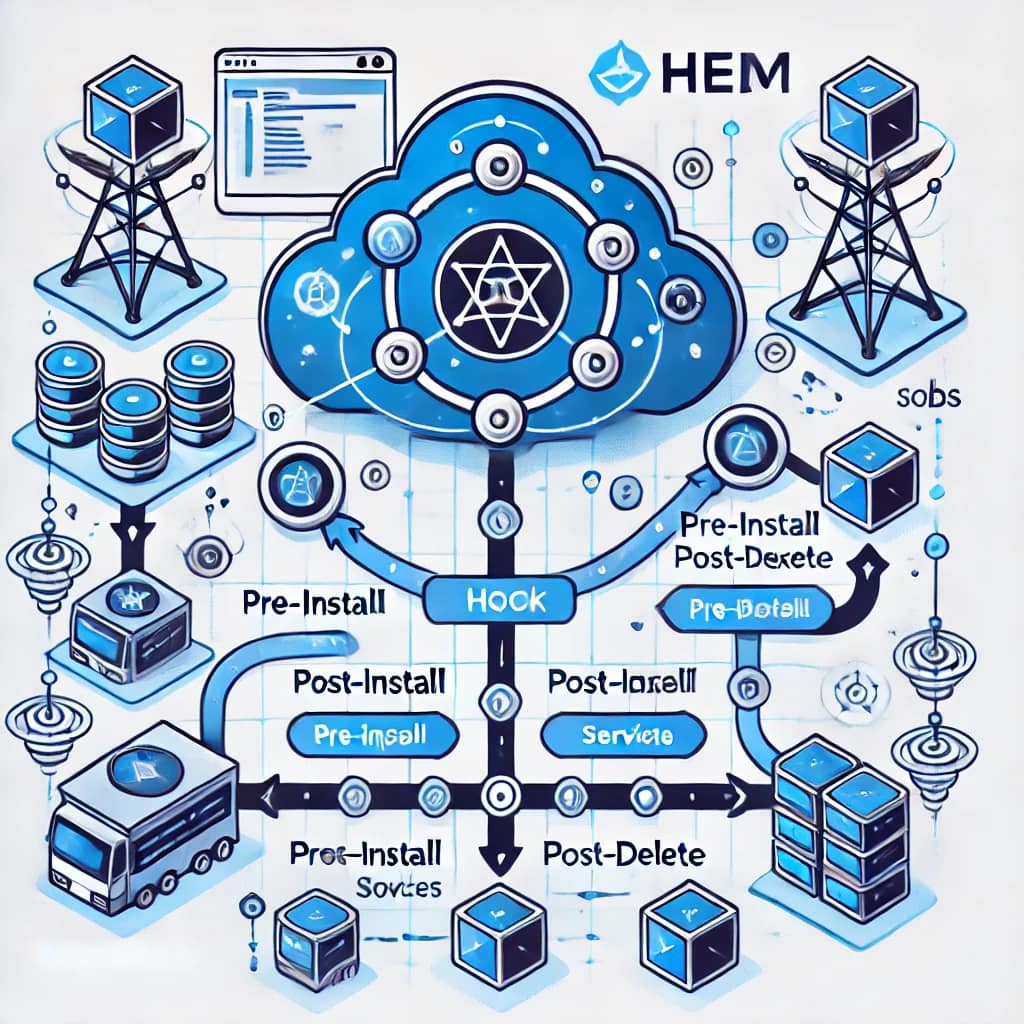
Helm hooks are a powerful—but often misunderstood—feature of Helm, the Kubernetes package manager. They allow you to execute Kubernetes resources at specific points in the Helm release lifecycle, enabling advanced deployment workflows, validations, migrations, and cleanups.

In this complete guide to Helm hooks, you’ll learn:

  • What Helm hooks are and how they work internally
  • All available Helm hooks and when to use each one
  • Real-world use cases with practical examples
  • Best practices and common pitfalls when working with Helm hooks in Kubernetes

If you build or maintain Helm charts in production, understanding Helm hooks is essential.

What Are Helm Hooks?

Helm hooks are Kubernetes resources annotated with special metadata that instruct Helm to execute them at specific lifecycle events, such as:

  • Before or after an install
  • Before or after an upgrade
  • Before or after a rollback
  • During deletion
  • When running tests

From a technical perspective, Helm hooks are implemented using annotations on standard Kubernetes resources (most commonly Job objects).

Helm evaluates these annotations during a Helm operation and executes the hooked resources outside the normal install/upgrade flow, giving you fine-grained lifecycle control.

Available Helm Hooks and Use Cases

Helm provides several hooks that correspond to different lifecycle stages. Below is a detailed breakdown of all Helm hooks, including execution timing and common use cases.

1. pre-install

Execution timing
After templates are rendered, but before any Kubernetes resources are created.

Typical use cases

  • Creating prerequisites (ConfigMaps, Secrets)
  • Performing environment validation
  • Preparing external dependencies
apiVersion: batch/v1
kind: Job
metadata:
  name: setup-config
  annotations:
    "helm.sh/hook": pre-install
spec:
  template:
    spec:
      containers:
        - name: config-creator
          image: busybox
          command: ['sh', '-c', 'echo "config data" > /config/config.txt']
      restartPolicy: Never

2. post-install

Execution timing
After all resources have been successfully created.

Typical use cases

  • Database initialization
  • Data seeding
  • Post-deployment verification
apiVersion: batch/v1
kind: Job
metadata:
  name: init-database
  annotations:
    "helm.sh/hook": post-install
spec:
  template:
    spec:
      containers:
        - name: db-init
          image: busybox
          command: ['sh', '-c', 'init-db-command']
      restartPolicy: Never

3. pre-delete

Execution timing
Triggered before Helm deletes any resources.

Typical use cases

  • Backups
  • Graceful shutdowns
  • External cleanup preparation
apiVersion: batch/v1
kind: Job
metadata:
  name: backup-before-delete
  annotations:
    "helm.sh/hook": pre-delete
spec:
  template:
    spec:
      containers:
        - name: backup
          image: busybox
          command: ['sh', '-c', 'backup-command']
      restartPolicy: Never

4. post-delete

Execution timing
After all release resources have been deleted.

Typical use cases

  • Cleaning up cloud resources
  • Removing external state
  • Audit logging
apiVersion: batch/v1
kind: Job
metadata:
  name: cleanup
  annotations:
    "helm.sh/hook": post-delete
spec:
  template:
    spec:
      containers:
        - name: cleanup
          image: busybox
          command: ['sh', '-c', 'cleanup-command']
      restartPolicy: Never

5. pre-upgrade

Execution timing
Before Helm applies any upgrade changes.

Typical use cases

  • Schema validation
  • Pre-upgrade checks
  • Compatibility verification
apiVersion: batch/v1
kind: Job
metadata:
  name: pre-upgrade-check
  annotations:
    "helm.sh/hook": pre-upgrade
spec:
  template:
    spec:
      containers:
        - name: upgrade-check
          image: busybox
          command: ['sh', '-c', 'upgrade-check-command']
      restartPolicy: Never

6. post-upgrade

Execution timing
After all upgraded resources are applied.

Typical use cases

  • Data migrations
  • Smoke tests
  • Post-upgrade validation
apiVersion: batch/v1
kind: Job
metadata:
  name: post-upgrade-verify
  annotations:
    "helm.sh/hook": post-upgrade
spec:
  template:
    spec:
      containers:
        - name: verification
          image: busybox
          command: ['sh', '-c', 'verify-upgrade']
      restartPolicy: Never

7. pre-rollback

Execution timing
Before Helm reverts to a previous release revision.

Typical use cases

  • Data snapshots
  • Notifications
  • Rollback preparation
apiVersion: batch/v1
kind: Job
metadata:
  name: pre-rollback-backup
  annotations:
    "helm.sh/hook": pre-rollback
spec:
  template:
    spec:
      containers:
        - name: backup
          image: busybox
          command: ['sh', '-c', 'rollback-backup']
      restartPolicy: Never

8. post-rollback

Execution timing
After rollback resources are restored.

Typical use cases

  • State verification
  • Alerting
  • Post-incident actions
apiVersion: batch/v1
kind: Job
metadata:
  name: post-rollback-verify
  annotations:
    "helm.sh/hook": post-rollback
spec:
  template:
    spec:
      containers:
        - name: verify
          image: busybox
          command: ['sh', '-c', 'verify-rollback']
      restartPolicy: Never

9. test

Execution timing
Executed only when running helm test.

Typical use cases

  • Integration tests
  • Health checks
  • End-to-end validation
apiVersion: batch/v1
kind: Job
metadata:
  name: test-application
  annotations:
    "helm.sh/hook": test
spec:
  template:
    spec:
      containers:
        - name: test
          image: busybox
          command: ['sh', '-c', 'run-tests']
      restartPolicy: Never

Helm Hook Annotations Explained

Helm provides additional annotations to control hook behavior:

  • helm.sh/hook-weight
    Controls execution order. Lower values run first.
  • helm.sh/hook-delete-policy
    Determines when hook resources are deleted:
    • hook-succeeded
    • hook-failed
    • before-hook-creation
  • helm.sh/resource-policy: keep
    Prevents Helm from deleting the resource, useful for debugging.

These annotations are critical for avoiding orphaned jobs and unexpected hook behavior.

Best Practices for Using Helm Hooks

✔ Use hooks sparingly — avoid overloading charts with logic
✔ Prefer idempotent hook jobs
✔ Always define restartPolicy: Never for Jobs
✔ Clean up hook resources with hook-delete-policy
✔ Avoid using hooks for core application logic

Conclusion

Helm hooks give you precise control over the Kubernetes deployment lifecycle, making them invaluable for advanced Helm charts and production workflows. When used correctly, they enable safer upgrades, cleaner rollbacks, and more reliable deployments.

FAQ & Takeaways

What are Helm hooks?

Helm hooks are Kubernetes resources annotated so that Helm executes them at specific points in the release lifecycle (e.g., before or after install, upgrade, delete). They allow you to prepare prerequisites, run jobs, or clean up resources.

How do I use Helm hooks in my Helm charts?

You add helm.sh/hook annotations to Kubernetes manifests in your chart. These annotations tell Helm when to run the resource (pre-install, post-install, pre-delete, etc.). Jobs are commonly used to implement hook tasks.

When should I use pre-install vs post-install hooks?

Use a pre-install hook when you need to create prerequisites (like ConfigMaps or Secrets) or validate the environment before deploying. Use a post-install hook when you need to initialize a database, seed data, or run verification jobs after the chart is installed.

Are Helm hooks removed automatically?

By default, hook resources are deleted after execution, but you can control this with the helm.sh/hook-delete-policy annotation (e.g., hook-succeeded, hook-failed, before-hook-creation) or keep them for debugging with helm.sh/resource-policy: keep.

What is the difference between Helm hooks and Helm tests?

Helm hooks run automatically at specified lifecycle events (install, upgrade, delete, rollback), whereas Helm tests run only when you invoke helm test. Tests are used to validate the health or functionality of your deployment.

To deepen your Helm expertise, check out our
👉 comprehensive Helm charts guide

Advanced Helm Commands and Flags Every Kubernetes Engineer Should Know

Advanced Helm Commands and Flags Every Kubernetes Engineer Should Know

Managing Kubernetes resources effectively can sometimes feel overwhelming, but Helm, the Kubernetes package manager, offers several commands and flags that make the process smoother and more intuitive. In this article, we’ll dive into some lesser-known Helm commands and flags, explaining their uses, benefits, and practical examples.

These advanced commands are essential for mastering Helm in production. For the complete toolkit including fundamentals, testing, and deployment patterns, visit our Helm package management guide.

1. helm get values: Retrieving Deployed Chart Values

The helm get values command is essential when you need to see the configuration values of a deployed Helm chart. This is particularly useful when you have a chart deployed but lack access to its original configuration file. With this command, you can achieve an “Infrastructure as Code” approach by capturing the current state of your deployment.

Usage:

helm get values <release-name> [flags]

Example:

To get the values of a deployed chart named my-release:

helm get values my-release --namespace my-namespace

This command outputs the current values used for the deployment, which is valuable for documentation, replicating the environment, or modifying deployments.

2. Understanding helm upgrade Flags: --reset-values, --reuse-values, and --reset-then-reuse

The helm upgrade command is typically used to upgrade or modify an existing Helm release. However, the behavior of this command can be finely tuned using several flags: --reset-values, --reuse-values, and --reset-then-reuse.

  • --reset-values: Ignores the previous values and uses only the values provided in the current command. Use this flag when you want to override the existing configuration entirely.

Example Scenario: You are deploying a new version of your application, and you want to ensure that no old values are retained.

  helm upgrade my-release my-chart --reset-values --set newKey=newValue
  • --reuse-values: Reuses the previous release’s values and merges them with any new values provided. This flag is useful when you want to keep most of the old configuration but apply a few tweaks.

Example Scenario: You need to add a new environment variable to an existing deployment without affecting the other settings.

  helm upgrade my-release my-chart --reuse-values --set newEnv=production
  • --reset-then-reuse: A combination of the two. It resets to the original values and then merges the old values back, allowing you to start with a clean slate while retaining specific configurations.

Example Scenario: Useful in complex environments where you want to ensure the chart is using the original default settings but retain some custom values.

  helm upgrade my-release my-chart --reset-then-reuse --set version=2.0

3. helm lint: Ensuring Chart Quality in CI/CD Pipelines

The helm lint command checks Helm charts for syntax errors, best practices, and other potential issues. This is especially useful when integrating Helm into a CI/CD pipeline, as it ensures your charts are reliable and adhere to best practices before deployment.

Usage:

helm lint <chart-path> [flags]
  • <chart-path>: Path to the Helm chart you want to validate.

Example:

helm lint ./my-chart/

This command scans the my-chart directory for issues like missing fields, incorrect YAML structure, or deprecated usage. If you’re automating deployments, integrating helm lint into your pipeline helps catch problems early. By adding this command in your CICD pipeline, you ensure that any syntax or structural issues are caught before proceeding to build or deployment stages. You can lear more about helm testing in the linked article

4. helm rollback: Reverting to a Previous Release

The helm rollback command allows you to revert a release to a previous version. This can be incredibly useful in case of a failed upgrade or deployment, as it provides a way to quickly restore a known good state.

Usage:

helm rollback <release-name> [revision] [flags]
  • [revision]: The revision number to which you want to roll back. If omitted, Helm will roll back to the previous release by default.

Example:

To roll back a release named my-release to its previous version:

helm rollback my-release

To roll back to a specific revision, say revision 3:

helm rollback my-release 3

This command can be a lifesaver when a recent change breaks your application, allowing you to quickly restore service continuity while investigating the issue.

5. helm verify: Validating a Chart Before Use

The helm verify command checks the integrity and validity of a chart before it is deployed. This command ensures that the chart’s package file has not been tampered with or corrupted. It’s particularly useful when you are pulling charts from external repositories or using charts shared across multiple teams.

Usage:

helm verify <chart-path>

Example:

To verify a downloaded chart named my-chart:

helm verify ./my-chart.tgz

If the chart passes the verification, Helm will output a success message. If it fails, you’ll see details of the issues, which could range from missing files to checksum mismatches.

Conclusion

Leveraging these advanced Helm commands and flags can significantly enhance your Kubernetes management capabilities. Whether you are retrieving existing deployment configurations, fine-tuning your Helm upgrades, or ensuring the quality of your charts in a CI/CD pipeline, these tricks help you maintain a robust and efficient Kubernetes environment.

Helm Multiple Instances Subcharts Explained: Reuse the Same Chart with Aliases

Helm Multiple Instances Subcharts Explained: Reuse the Same Chart with Aliases

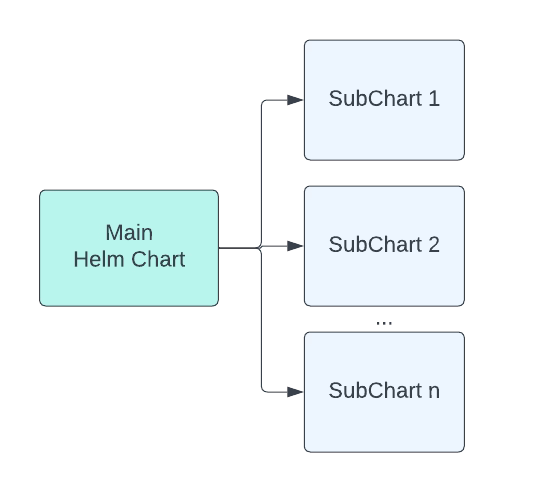
Helm Multiple Instances Subchart usages as part of your main chart could be something that, from the beginning, can sound strange. We already commented about the helm charts sub-chart and dependencies in the blog because the usual use case is like that:

Multiple subchart instances enable powerful architectural patterns in Helm. Learn about this and other advanced deployment techniques in our complete Helm charts guide.

I have a chart that needs another component, and I “import” it as a sub-chart, which gives me the possibility to deploy the same component and customize its values without needing to create another chart copy and, as you can imagine simplifying a lot of the management of the charts, a sample can be like that:

Discover how multiple subcharts can revolutionize your Helm deployments. Learn how to leverage the power of reusability and customization, allowing you to deploy identical components with unique configurations. Enhance flexibility and simplify management with this advanced Helm feature. Unlock the full potential of your microservices architecture and take control of complex application deployments. Dive into the world of multiple subcharts and elevate your Helm charts to the next level.

So, I think that’s totally clear, but what about are we talking now? The use-case is to have the same sub-chart defined twice. So, imagine this scenario, we’re talking about that instead of this:

# Chart.yaml
dependencies:
- name: nginx
  version: "1.2.3"
  repository: "https://example.com/charts"
- name: memcached
  version: "3.2.1"
  repository: "https://another.example.com/charts"

We’re having something like this

# Chart.yaml
dependencies:
- name: nginx
  version: "1.2.3"
  repository: "https://example.com/charts"
- name: memcached-copy1
  version: "3.2.1"
  repository: "https://another.example.com/charts"
- name: memcached-copy2
  version: "3.2.1"
  repository: "https://another.example.com/charts"

So we have the option to define more than one “instance” of the same sub chart. And I guess, at this moment, you can start asking to yourself: “What are the use-case where I could need this?”

Because that’s quite understandable, unless you need it you will never realize about that. It is the same that happens to me. So let’s talk a bit about possible use cases for this.

 Use-Cases For Multi Instance Helm Dependency

Imagine that you’re deploying a helm chart for a set of microservices that belongs to the scope of the same application and each of the microservices has the same technology base, that can be TIBCO BusinessWorks Container Edition or it can be Golang microservices. So all of them has the same base so it can use the same chart “bwce-microservice” or “golang-microservices” but each of them has its own configuration, for example:

  • Each of them will have its own image name that would differ from one to the other.
  • Each of them will have its own configuration that will differ from one to the other.
  • Each of them will have its own endpoints that will differ and probably even connecting to different sources such as databases or external systems.

So, this approach would help us reuse the same technology helm chart, “bwce” and instance it several times, so we can have each of them with its own configuration without the need to create something “custom” and keeping the same benefits in terms of maintainability that the helm dependency approach provides to us.

 How can we implement this?

Now that we have a clear the use-case that we’re going to support, the next step is regarding how we can do this a reality. And, to be honest, this is much simpler than you can think from the beginning, let’s start with the normal situation when we have a main chart, let’s call it a “program,” that has included a “bwce” template as a dependency as you can see here:

name: multi-bwce
description: Helm Chart to Deploy a TIBCO BusinessWorks Container Edition Application
apiVersion: v1
version: 0.2.0
icon: 
appVersion: 2.7.2

dependencies:
- name: bwce
  version: ~1.0.0
  repository: "file:///Users/avazquez/Data/Projects/DET/helm-charts/bwce"

And now, we are going to move to a multi-instance approach where we will require two different microservices, let’s call it serviceA and serviceB, and both of them we will use the same bwce helm chart.

So the first thing we will modify is the Chart.yaml as follows:

name: multi-bwce
description: Helm Chart to Deploy a TIBCO BusinessWorks Container Edition Application
apiVersion: v1
version: 0.2.0
icon: 
appVersion: 2.7.2

dependencies:
- name: bwce
  alias: serviceA
  version: ~0.2.0
  repository: "file:///Users/avazquez/Data/Projects/DET/helm-charts/bwce"
- name: bwce
  alias: serviceB
  version: ~0.2.0
  repository: "file:///Users/avazquez/Data/Projects/DET/helm-charts/bwce"

The important part here is how we declare the dependency. As you can see in the name we still keeping the same “name” but they have an additional field named “alias” and this alias is what we will help to later identify the properties for each of the instances as we required. With that, we’re already have our two serviceA and serviceB instance definition and we can start using it in the values.yml as follows:

# This is a YAML-formatted file.
# Declare variables to be passed into your templates.

serviceA:
  image: 
    imageName: 552846087011.dkr.ecr.eu-west-2.amazonaws.com/tibco/serviceA:2.5.2
    pullPolicy: Always
serviceB:  
  image: 
    imageName: 552846087011.dkr.ecr.eu-west-2.amazonaws.com/tibco/serviceB:2.5.2
    pullPolicy: Always
  

 Conclusion

The main benefit of this is that it enhances the options of using helm chart for “complex” applications that require different instances of the same kind of components and at the same time.

That doesn’t mean that you need a huge helm chart for your project because this will go against all the best practices of the whole containerization and microservices approach but at least it will give you the option to define different levels of abstraction as you want, keeping all the benefits from a management perspective.