

Save time and money on your application platform deploying applications differently in Kubernetes.
We have come from a time where we deploy an application using an apparent and straight-line process. The traditional way is pretty much like this:- Wait until a weekend or some time where the load is low, and business can tolerate some service unavailability.
- We schedule the change and warn all the teams involved for that time to be ready to manage the impact.
- We deploy the new version and we have all the teams during the functional test they need to do to ensure that is working fine, and we wait for the real load to happen.
- We monitor during the first hours to see if something wrong happens, and in case it does, we establish a rollback process.
- As soon as everything goes fine, we wait until the next release in 3–4 months.
Introducing Canary Deployments
Canary deployments (or just Canarying as you prefer) are not something new, and a lot of people has been talking a lot about it:
bliki: CanaryRelease
A canary release occurs when you roll out a new version of some software to a small subset of your user base to see if there are any problems before you make it available to everyone.
Google - Site Reliability Engineering
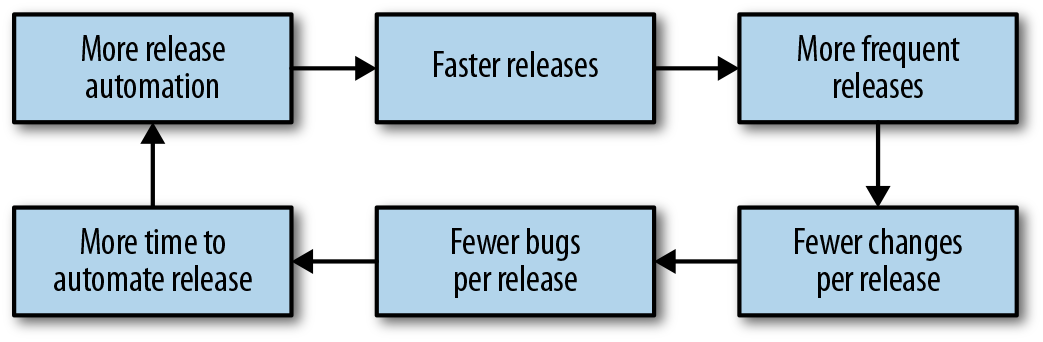
Release engineering is a term we use to describe all the processes and artifacts related to getting code from a repository into a running production system. Automating releases can help avoid many of the traditional pitfalls associated with release engineering: the toil of repetitive and manual task…
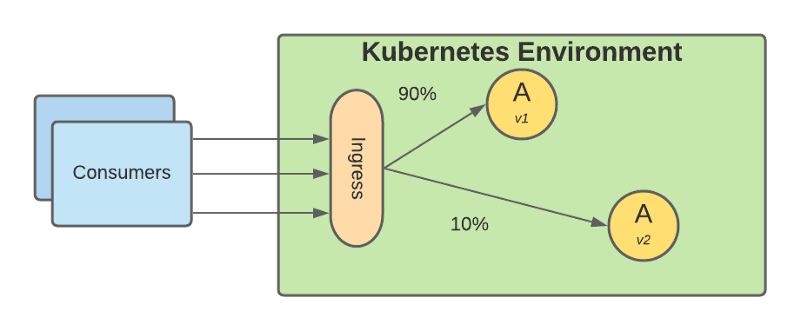
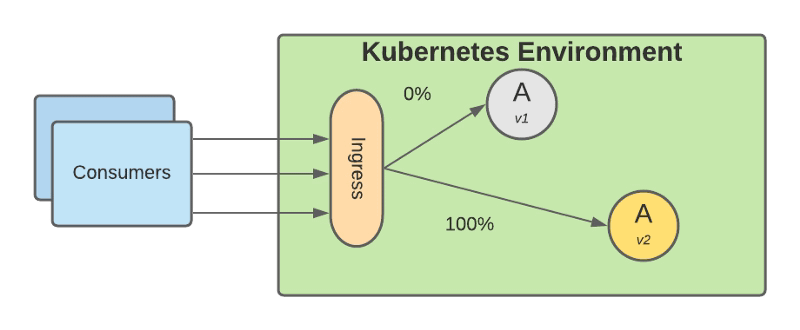
- You don’t need a big staging environment as before because you can do some of the tests with real data into the production while not affecting your business and the availability of your services.
- You can reduce time to market and increase the frequency of deployments because you can do it with less effort and people involved.
- Your deployment window has been extended a lot as you do not need to wait for a specific time window, and because of that, you can deploy new functionality more frequently.
Implementing Canary Deployment in Kubernetes
To implement Canary Deployment in Kubernetes, we need to provide more flexibility to how the traffic is routed among our internal components, which is one of the capabilities that get extended from using a Service Mesh. We already discussed the benefits of using a Service Mesh as part of your environment, but if you would like to retake a look, please refer to this article:
Technology wars: API Management Solution vs Service Mesh
Service Mesh vs. API Management Solution: is it the same? Are they compatible? Are they rivals? Photo by Alvaro Reyes on Unsplash When we talk about communication in a distributed cloud-native world and especially when we are talking about container-based architectures based on Kubernetes platform like AKS, EKS, Openshift, and so on, two technologies generate a lot […]

Integrating Istio with BWCE Applications
Introduction Services Mesh is one the “greatest new thing” in our PaaS environments. No matter if you’re working with K8S, Docker Swarm, pure-cloud with EKS or AWS, you’ve heard and probably tried to know how can be used this new thing that has so many advantages because it provides a lot of options in handling […]

Kubernetes Service Discovery for Prometheus
In previous posts, we described how to set up Prometheus to work with your TIBCO BusinessWorks Container Edition apps, and you can read more about it here. In that post, we described that there were several ways to update Prometheus about the services that ready to monitor. And we choose the most simple at that […]

Using Spinnaker for Automated Canary Analysis
Automated canary analysis lets you partially roll out a change then evaluate it against the current deployment to assess its performance.
Summary
In this article, we covered how we can evolve a traditional deployment model to keep pace with innovation that businesses require today and how canary deployment techniques can help us on that journey, and the technology components needed to set up this strategy in your own environment.📚 Want to dive deeper into Kubernetes? This article is part of our comprehensive Kubernetes Architecture Patterns guide, where you’ll find all fundamental and advanced concepts explained step by step.