MinIO in Maintenance Mode: What It Means for the Community Edition, OEM Users, and Open-Source Alternatives

MinIO in Maintenance Mode: What It Means for the Community Edition, OEM Users, and Open-Source Alternatives

Background: MinIO and the Maintenance Mode announcement

MinIO has long been one of the most popular self-hosted S3-compatible object storage solutions, especially in Kubernetes and on‑premise environments. Its simplicity, performance, and API compatibility made it a common default choice for backups, artifacts, logs, and internal object storage.

In late 2025, MinIO marked its upstream repository as Maintenance Mode and clarified that the Community Edition would be distributed source-only, without official pre-built binaries or container images. This move triggered renewed discussion across the industry about sustainability, governance, and the risks of relying on a single-vendor-controlled “open core” storage layer.

A detailed industry analysis of this shift, including its broader ecosystem impact, can be found in this InfoQ article

What exactly changed?

1. Maintenance Mode

Maintenance Mode means:

  • No new features
  • No roadmap-driven improvements
  • Limited fixes, typically only for critical issues
  • No active review of community pull requests

As highlighted by InfoQ, this effectively freezes MinIO Community as a stable but stagnant codebase, pushing innovation and evolution exclusively toward the commercial offerings.

2. Source-only distribution

Official binaries and container images are no longer published for the Community Edition. Users must:

  • Build MinIO from source
  • Maintain their own container images
  • Handle signing, scanning, and provenance themselves

This aligns with a broader industry pattern noted by InfoQ: infrastructure projects increasingly shifting operational burden back to users unless they adopt paid tiers.

Direct implications for Community users

Security and patching

With no active upstream development:

  • Vulnerability response times may increase
  • Users must monitor security advisories independently
  • Regulated environments may find Community harder to justify

InfoQ emphasizes that this does not make MinIO insecure by default, but it changes the shared-responsibility model significantly.

Operational overhead

Teams now need to:

  • Pin commits or tags explicitly
  • Build and test their own releases
  • Maintain CI pipelines for a core storage dependency

This is a non-trivial cost for what was previously perceived as a “drop‑in” component.

Support and roadmap

The strategic message is clear: active development, roadmap influence, and predictable maintenance live behind the commercial subscription.

Impact on OEM and embedded use cases

The InfoQ analysis draws an important distinction between API consumers and technology embedders.

Using MinIO as an external S3 service

If your application simply consumes an S3 endpoint:

  • The impact is moderate
  • Migration is largely operational
  • Application code usually remains unchanged

Embedding or redistributing MinIO

If your product:

  • Ships MinIO internally
  • Builds gateways or features on MinIO internals
  • Depends on MinIO-specific operational tooling

Then the impact is high:

  • You inherit maintenance and security responsibility
  • Long-term internal forking becomes likely
  • Licensing (AGPL) implications must be reassessed carefully

For OEM vendors, this often forces a strategic re-evaluation rather than a tactical upgrade.

Forks and community reactions

At the time of writing:

  • Several community forks focus on preserving the MinIO Console / UI experience
  • No widely adopted, full replacement fork of the MinIO server exists
  • Community discussion, as summarized by InfoQ, reflects caution rather than rapid consolidation

The absence of a strong server-side fork suggests that most organizations are choosing migration over replacement-by-fork.

Fully open-source alternatives to MinIO

InfoQ highlights that the industry response is not about finding a single “new MinIO”, but about selecting storage systems whose governance and maintenance models better match long-term needs.

Ceph RGW

Best for: Enterprise-grade, highly available environments
Strengths: Mature ecosystem, large community, strong governance
Trade-offs: Operational complexity

SeaweedFS

Best for: Teams seeking simplicity and permissive licensing
Strengths: Apache-2.0 license, active development, integrated S3 API
Trade-offs: Partial S3 compatibility for advanced edge cases

Garage

Best for: Self-hosted and geo-distributed systems
Strengths: Resilience-first design, active open-source development
Trade-offs: AGPL license considerations

Zenko / CloudServer

Best for: Multi-cloud and Scality-aligned architectures
Strengths: Open-source S3 API implementation
Trade-offs: Different architectural assumptions than MinIO

Recommended strategies by scenario

If you need to reduce risk immediately

  • Freeze your current MinIO version
  • Build, scan, and sign your own images
  • Define and rehearse a migration path

If you operate Kubernetes on-prem with HA requirements

  • Ceph RGW is often the most future-proof option

If licensing flexibility is critical

  • Start evaluation with SeaweedFS

If operational UX matters

  • Shift toward automation-first workflows
  • Treat UI forks as secondary tooling, not core infrastructure

Conclusion

MinIO’s shift of the Community Edition into Maintenance Mode is less about short-term breakage and more about long-term sustainability and control.

As the InfoQ analysis makes clear, the real risk is not technical incompatibility but governance misalignment. Organizations that treat object storage as critical infrastructure should favor solutions with transparent roadmaps, active communities, and predictable maintenance models.

For many teams, this moment serves as a natural inflection point: either commit to self-maintaining MinIO, move to a commercially supported path, or migrate to a fully open-source alternative designed for the long run.

Problems with Ingress in Kubernetes: Complexity, Incompatibilities, and the Future with Gateway API

Problems with Ingress in Kubernetes: Complexity, Incompatibilities, and the Future with Gateway API

Introduction

Ingresses have been, since the early versions of Kubernetes, the most common way to expose applications to the outside. Although their initial design was simple and elegant, the success of Kubernetes and the growing complexity of use cases have turned Ingress into a problematic piece: limited, inconsistent between vendors, and difficult to govern in enterprise environments.

In this article, we analyze why Ingresses have become a constant source of friction, how different Ingress Controllers have influenced this situation, and why more and more organizations are considering alternatives like Gateway API.

What Ingresses are and why they were designed this way

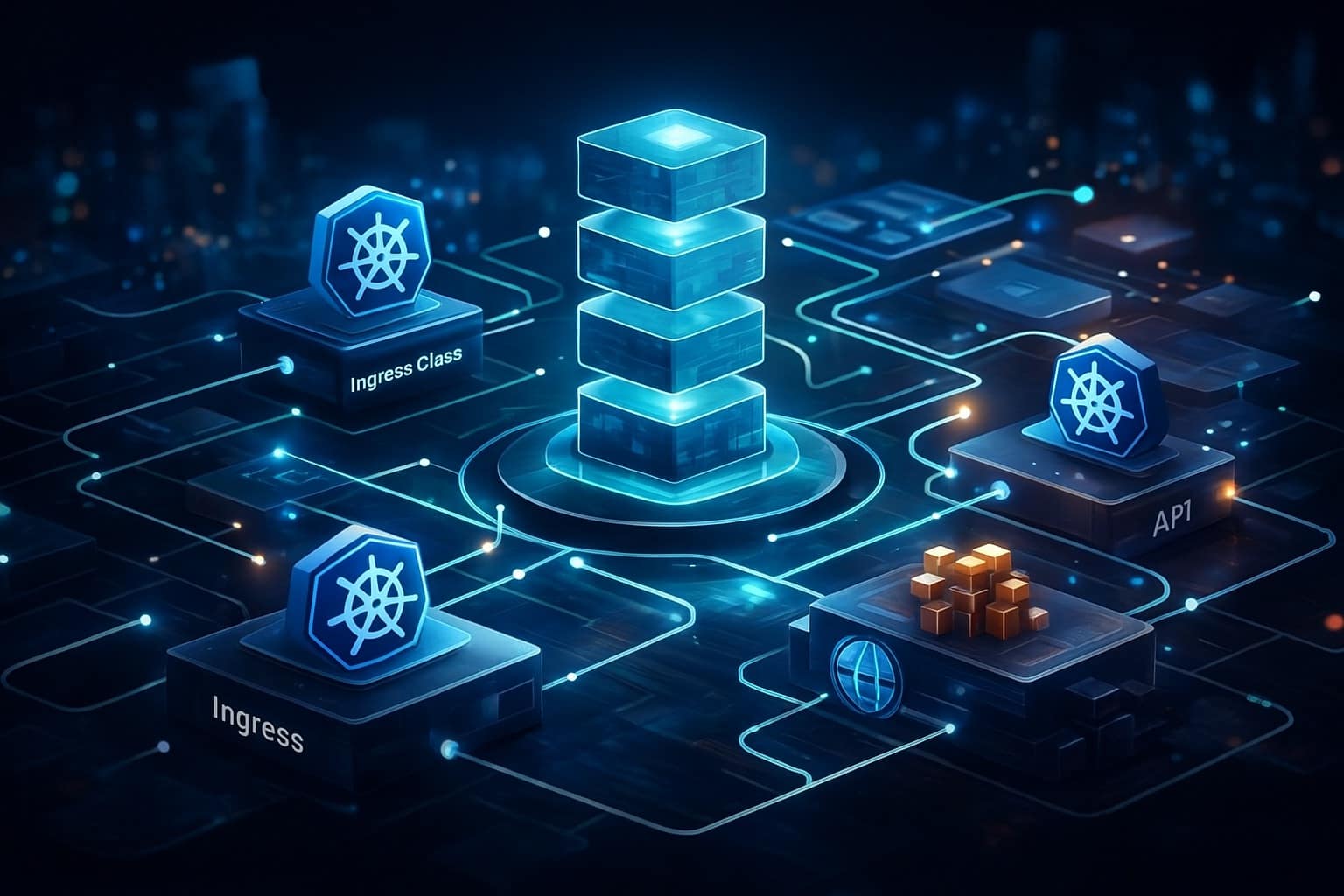
The Ingress ecosystem revolves around two main resources:

🏷️ IngressClass

Defines which controller will manage the associated Ingresses. Its scope is cluster-wide, so it is usually managed by the platform team.

🌐 Ingress

It is the resource that developers use to expose a service. It allows defining routes, domains, TLS certificates, and little more.

Its specification is minimal by design, which allowed for rapid adoption, but also laid the foundation for current problems.

The problem: a standard too simple for complex needs

As Kubernetes became an enterprise standard, users wanted to replicate advanced configurations of traditional proxies: rewrites, timeouts, custom headers, CORS, etc.
But Ingress did not provide native support for all this.

Vendors reacted… and chaos was born.

Annotations vs CRDs: two incompatible paths

Different Ingress Controllers have taken very different paths to add advanced capabilities:

📝 Annotations (NGINX, HAProxy…)

Advantages:

  • Flexible and easy to use
  • Directly in the Ingress resource

Disadvantages:

  • Hundreds of proprietary annotations
  • Fragmented documentation
  • Non-portable configurations between vendors

📦 Custom CRDs (Traefik, Kong…)

Advantages:

  • More structured and powerful
  • Better validation and control

Disadvantages:

  • Adds new non-standard objects
  • Requires installation and management
  • Less interoperability

Result?
Infrastructures deeply coupled to a vendor, complicating migrations, audits, and automation.

The complexity for development teams

The design of Ingress implies two very different responsibilities:

  • Platform: defines IngressClass
  • Application: defines Ingress

But the reality is that the developer ends up making decisions that should be the responsibility of the platform area:

  • Certificates
  • Security policies
  • Rewrite rules
  • CORS
  • Timeouts
  • Corporate naming practices

This causes:

  • Inconsistent configurations
  • Bottlenecks in reviews
  • Constant dependency between teams
  • Lack of effective standardization

In large companies, where security and governance are critical, this is especially problematic.

NGINX Ingress: the decommissioning that reignited the debate

The recent decommissioning of the NGINX Ingress Controller has highlighted the fragility of the ecosystem:

  • Thousands of clusters depend on it
  • Multiple projects use its annotations
  • Migrating involves rewriting entire configurations

This has reignited the conversation about the need for a real standard… and there appears Gateway API.

Gateway API: a promising alternative (but not perfect)

Gateway API was born to solve many of the limitations of Ingress:

  • Clear separation of responsibilities (infrastructure vs application)
  • Standardized extensibility
  • More types of routes (HTTPRoute, TCPRoute…)
  • Greater expressiveness without relying on proprietary annotations

But it also brings challenges:

  • Requires gradual adoption
  • Not all vendors implement the same
  • Migration is not trivial

Even so, it is shaping up to be the future of traffic management in Kubernetes.

Conclusion

Ingresses have been fundamental to the success of Kubernetes, but their own simplicity has led them to become a bottleneck. The lack of interoperability, differences between vendors, and complex governance in enterprise environments make it clear that it is time to adopt more mature models.

Gateway API is not perfect, but it moves in the right direction.
Organizations that want future stability should start planning their transition.

Scale To Zero And From Zero in Your Kubernetes Cluster

brown and beige weighing scale

Bringing the Serverless Experience To Your Kubernetes Cluster

Scale To Zero And From Zero in Your Kubernetes Cluster

Photo by Piret Ilver on Unsplash

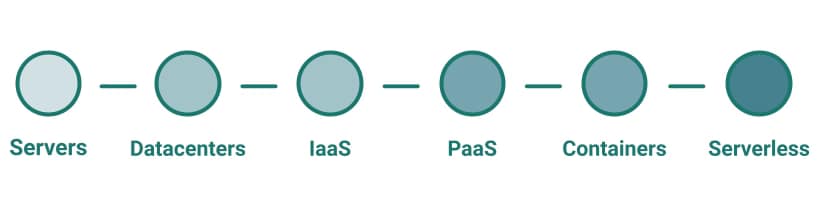
Serverless always has been considered the next step in the cloud journey. You know what I mean: you start from your VM on-premises, then you move to have containers on a PaaS platform, and then you try to find your next stop in this journey that is serverless.

Scale To Zero And From Zero in Your Kubernetes Cluster
Technological evolution defined based on infrastructure abstraction perspective

Serverless is the idea of forgetting about infrastructure and focusing only on your apps. There is no need to worry about where it will run or the management of the underlying infrastructure. Serverless has started as a synonym of the Function as a Service (FaaS) paradigm. It has been populated first by the Amazon Lambda functions and later by all the major cloud providers.

It started as an alternative to the containerized approach that probably requires a lot of technical skills to manage and run at a production scale, but this is not the case anymore.

We have seen how the serverless approach has reached any platform despite this starting point. Following the same principles, we have different platforms that its focus is to abstract all technical aspects for the operational part and provide a platform where you can put your logic running. Pretty much every SaaS platform covers this approach but I would like to highlight some samples to clarify:

  • netlify is a platform that allows you to deploy your web application without needing to manage anything else that the code needed to run it.
  • TIBCO Cloud Integration is an iPaaS solution that provides all the technical resources you could need so you can focus on deploying your integration services.

But going beyond that, pretty much each service provided by the major cloud platform such as Azure, AWS, or GCP follows the same principle. Most of them (messaging, machine learning, storage, and so on) abstract all the infrastructure underlying it so you can focus on the real service.

Going back to the Kubernetes ecosystem we have two different layers of that approach. The main one is the managed Kubernetes services that all big platforms provide where all the management of the Kubernetes (master nodes, internal Kubernetes components) are transparent to you and you center everything on the workers. And the second level is what you can get in the AWS world with the EKS + Fargate kind of architecture where not even the worker nodes exist, you have your pods that will be deployed on a machine that belongs to your cluster but you don’t need to worry about it, or manage anything related to that.

So as we have seen serverless approach is coming to all areas but this is not the scope of this article. The idea here is to try to focus on the serverless as a synonym of Function as a Service and (FaaS) and How we can bring the FaaS experience to our productive K8S ecosystem. But let’s start with the initial questions:

Why would we like to do that?

This is the most exciting thing to ask: what are the benefits this approach provides? Function as a Service follows the zero-scale approach. That means that the function is not loaded if they are not being executed, and this is important, especially when you are responsible for your infrastructure or at least paying for it.

Imagine a normal microservices written in any technology, the amount of resources it can use depends on its load, but even without any load, you need some resources to keep it running; mainly, we are talking about memory that you need to stay in use. The actual amount will depend on the technology and the development itself, but it can be moved from some MB to some hundreds. If we consider all the microservices a significant enterprise can get, you will get a difference of several GB that you are paying for that are not providing any value.

But beyond the infrastructure management, this approach also plays very well with another of the latest architectural approaches, the Event-Driven Application (EDA), because we can have services that are asleep just waiting for the right event to wake them up and start processing.

So, in a nutshell, the serverless approach helps you get your optimized infrastructure dream and enable different patterns also in an efficient way. But what happens is I already own the infrastructure? It will be the same because you will run more services in the same infrastructure, so you will still get the optimized use of your current infrastructure.

What do we need to enable that?

The first thing that we need to know is that not all technologies or frameworks are suitable to run on this approach. That is because you need to meet some requirements to be able to do that as a successful approach, as shown below:

  • Quick Startup: If your logic is not loaded before a request hits the service, you will need to make sure the logic can load quickly to avoid impacting the consumer of the service. So that means that you will need a technology that can load in a small amount of time, usually talking in the microsecond range.
  • Stateless: As your logic is not going to be loaded in a continuous mode it is not suitable for stateful services.
  • Disposability: Similar to the previous point it should be ready for graceful shutdown in a robust way

How do we do that?

Several frameworks allow us to get all those benefits that we can incorporate into our Kubernetes ecosystem, such as the following ones:

  • KNative: This is the framework that the CNCF Foundation supports and is being included by default in many Kubernetes distributions such as Red Hat Openshift Platform.
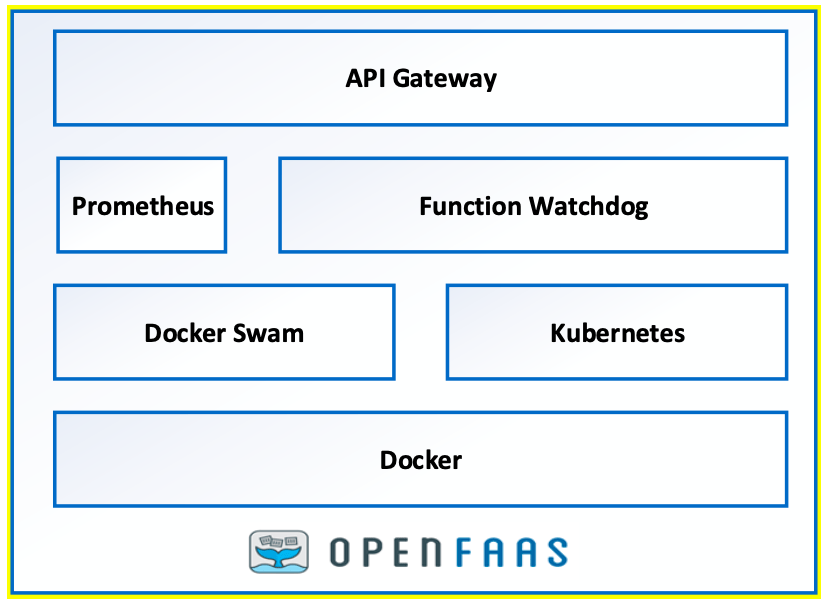
  • OpenFaaS: This is a well-used framework created by Alex Ellis that supports the same idea.

It is true that there are other alternatives such as Apache OpenWhisk, Kubeless, or Fission but there less used in today’s world and mainly most alternative has been chosen between OpenFaaS and KNative but if you want to read more about other alternatives I will let you an article about the CNCF covering them so you can take a look for yourself:

Why You Shouldn’t Add a Resource Quota Using The Limit Value?

woman in blue denim jacket holding white paper

If You Aren’t Careful You Can Block The Scalability Of Your Workloads

Why You Shouldn’t Add a Resource Quota Using The Limit Value?

Photo by Joshua Hoehne on Unsplash

One of the great things about container-based developments idefiningne isolation spaces where you have guaranteed resources such as CPU and memory. This is also extended on Kubernetes-based environments at the namespace level, so you can have different virtual environments that cannot exceed the usage of resources at a specified level.

To define that you have the concept of Resource Quota that works at the namespace level. Based on its own definition (https://kubernetes.io/docs/concepts/policy/resource-quotas/)

A resource quota, defined by a ResourceQuota object, provides constraints that limit aggregate resource consumption per namespace. It can limit the quantity of objects that can be created in a namespace by type, as well as the total amount of compute resources that may be consumed by resources in that namespace.

You have several options to define the usage of these Resource Quotas but we will focus on this article on the main ones as follows:

  • limits.cpu: Across all pods in a non-terminal state, the sum of CPU limits cannot exceed this value.
  • limits.memory: Across all pods in a non-terminal state, the sum of memory limits cannot exceed this value.
  • requests.cpu: Across all pods in a non-terminal state, the sum of CPU requests cannot exceed this value.
  • requests.memory: Across all pods in a non-terminal state, the sum of memory requests cannot exceed this value.

So you can think that this is a great option to define a limit.cpu and limit.memory quota, so you make sure that you will not extend that amount of usage by any means. But you need to be careful about what this means, and to illustrate that I will use a sample.

I have a single workload with a single pod with the following resource limitation:

  • requests.cpu: 500m
    • limits.cpu: 1
    • requests.memory: 500Mi
    • limits.memory: 1 GB

Your application is a Java-based application that exposes a REST Service ant has configured a Horizontal Pod Autoscaler rule to scale when the amount of CPU exceeds its 50%.

So, we start in the primary situation: with a single instance that requires to run 150 m of vCPU and 200 RAM, so a little bit less than 50% to avoid the autoscaler. But we have a Resource Quota about the limits of the pod (1 vCPU and 1 GB) so we have blocked that. We have more requests and we need to scale to two instances. To simplify the calculations, we will assume that we will use the same amount of resources for each of the instances, and we will continue that way until we reach 8 instances. So lets’ see how it changes the limits defined (the one that will limit the number of objects I can create in my namespace) and the actual amount of resources that I am using:

Why You Shouldn’t Add a Resource Quota Using The Limit Value?

So, for resources used amount of 1.6 vCPU I have blocked 8 vCPU, and in case that was my Resource Limit, I cannot create more instances, even though I have 6.4 vCPU not used that I have allowed deploying because of this kind of limitation I cannot do it.

Yes, I am able to ensure the principle that I never will use more than 8 vCPU, but I’ve been blocked very early on that trend affecting the behavior and scalability of my workloads.

Because of that, you need to be very careful when you are defining these kinds of limits and making sure what you are trying to achieve because to solve one problem you can be generating another one.

I hope this can help you to prevent this issue for happening in your daily work or at least to keep it in mind when you are facing similar scenarios.

Event Streaming, API and Data Integration: 3 Pillars You Should Master On the Cloud

Event Streaming, API and Data Integration: 3 Pillars You Should Master On the Cloud

Event Streaming, API, and Data are the three musketeers that cover all the aspects of mastering integration in the cloud.

Event Streaming, API, and Data are the three musketeers that cover all the aspects of mastering integration in the cloud.
Photo by Simon Rae on Unsplash

Enterprise Application Integration has been one of the most challenging IT landscape topics since the beginning of time. As soon as the number of systems and applications in big corporations started and grows, this becomes an issue we should address. This process’s efficiency will also define what companies succeed and which ones will fail as the cooperation between applications becomes critical to respond at the pace that the business was demanding.

I usually like to use the “road analogy” to define this:

It doesn’t matter if you have the fastest cars if you don’t have proper roads you will not get anywhere

This situation generates a lot of investments from the companies. Also, a lot of vendors and products were launched to support that situation. Some solutions are starting to emerge: EAI, ESB, SOA, Middleware, Distributed Integration Platforms, Cloud-Native solution, and iPaaS.

Each of the approaches provides a solution for existing challenges. As long as the rest of the industry was evolving, the solutions changed to adapt to the new reality (containers, microservices, DevOps, API-led, Event-Driven..)

So, what is the situation today? Today is extended the misconception that integration is the same as API and also that API is asynchronous HTTP based (REST, gRPC, GraphQL) API. But it is much more than this.

Event Streaming, API and Data Integration: 3 Pillars You Should Master On the Cloud
Photo by Tolga Ulkan on Unsplash

1.- API

API-led is key to the integration solution for sure, especially focus on the philosophical approach behind it. Each component that we create today is created with a collaboration in mind to work with existing and future components to benefit the business in an easy and agile way. This transcends the protocol discussion completely.

API covers all different kinds of solutions from existing REST API to AsyncAPI to cover the event-based API.

2.- Event Streaming

Asynchronous communication is needed because the patterns and the requirements when you are talking about big enterprises and different applications make this essential. Requirements like pub-sub approach to increase independence among services and apps, control-flow to manage the execution of high-demanding flows that can exceed the throttling for applications, especially when talking about SaaS solutions.

So, you can think that this is a very opinionated view, but at the same time, this is something that most of the providers in this space have realized based on their actions:

  • AWS release SNS/SQS, its first messaging system, as its only solution.
  • Nov 2017 AWS releases Amazon MQ, another queue messaging system to cover the scenarios that SQS cannot cover.
  • May 2019 AWS releases Amazon MSK, a managed service for Kafka solutions to provide streaming data distribution and processing capabilities.

And that situation is because when we move away from smaller applications when we are migrating from a monolith approach to a micro-service application, more patterns and more requirements are needed, and here is. In contrast, integration solutions have shown in the past,t this is critical for integration solutions.

3.- Data Integration

Usually, when we talk about integration, we talk about Enterprise Application Integration because we have this past bias. Even I use this term to cover this topic, EAI, because we usually refer to these solutions. But since the last years, we are more focused on the data distribution amount the company rather than how applications integrated because what is really important is the data they are exchanging and how we can transform this raw data into insights that we can use to know better our customers or optimize our process or discover new opportunities based on that.

Until recently, this part was handled apart from the integration solutions. You probably rely on a focused ETL (Extract-Transform-Load) that helps to move the data from one database to another or a different kind of storage like a Data Warehouse so your Data Scientist can work with them.

But again, agility has made that this needs to change, and all the principles integration has in terms of providing more agility to the business is also applied to how we exchange data. We try to avoid the data’s technical move and try to ease the access and the right organization on this data. Data Virtualization and Data Streaming are the core capabilities that address and handle those challenges providing an optimized solution for how the data is distributed.

Summary

My main expectation with this article is to make you aware that when you are thinking about integrating your application, this is much more than the REST API that you are exposing, maybe using some API Gateway, and the needs can be very different. The strongest your integration platform is, the stronger your business will be.

SOA Principles That Survived in Cloud-Native Architecture

SOA Principles That Survived in Cloud-Native Architecture

The development world has changed a lot, but that does not mean that all things are not valid. Learn what principles you should be aware of.

SOA Principles That Survived in Cloud-Native Architecture
Photo by Charles Deluvio on Unsplash

The world changes fast, and in IT, it changes even faster. We all know that, which usually means that we need to face new challenges and find new solutions. Samples of that approach are the trends we have seen in the last years: Containers, DevSecOps, Microservices, GitOps, Service Mesh…

But at the same time, we know that IT is a cycle in terms that the challenges that we face today are different evolution of challenges that have been addressed in the past. The main goal is to avoid re-inventing the wheel and avoiding making the same mistakes people before us.

So, I think it is worth it to review principles that Service-oriented Architectures (SOA) provided to us in the last decades and see which ones are relevant today.

Principles Definition

I will use the principles from Thomas Erl’s SOA Principles of Service Design and the definitions that we can found on the Wikipedia article:

1.- Service Abstraction

Design principle that is applied within the service-orientation design paradigm so that the information published in a service contract is limited to what is required to effectively utilize the service.

The main goal behind these principles is that a service consumer should not be aware of the particular component. The main advantage of that approach is that we need to change the current service provider. We can do it without impacting those consumers. This is still totally relevant today because of different reasons:

  • Service to service communication: Service Meshes and similar projects provide service registry and service discovery capabilities based on the same principles to avoid knowing the pod providing the functionality.
  • SaaS “protection-mode” enabled: Some backend systems are still here to stay even if they have more modern ways to be set up as SaaS platforms. That flexibility also provides a more easy way to move away or change the SaaS application providing the functionality. But all that flexibility is not real if you have that SaaS application totally coupled with the rest of the microservices and cloud-native application in your land space.

2.- Service Autonomy

Design principle that is applied within the service-orientation design paradigm, to provide services with improved independence from their execution environments.

We all know the importance of the service isolation that cloud-native development patterns provide based on containers’ capabilities to provide independence among execution environments.

Each service should have its own execution context isolated as much as possible from the execution context of the other services to avoid any interference between them.

So that is still relevant today but encouraged by today’s paradigms as the new normal way to do things because of the benefits shown.

3.- Service Statelessness

Design principle that is applied within the service-orientation design paradigm, in order to design scalable services by separating them from their state data whenever possible.

Stateless microservices do not maintain their own state within the services across calls. The services receive a request, handle it, and reply to the client requesting that information. If needed to store some state information, this should be done externally to the microservices using an external data store such as a relational database, a NoSQL database, or any other way to store information outside the microservice.

4.- Service Composability

Design of services that can be reused in multiple solutions that are themselves made up of composed services. The ability to recompose the service is ideally independent of the size and complexity of the service composition.

We all know that re-usability is not one of the principles behind the microservices because they argue that re-usability is against agility; when we have a shared service among many parties, we do not have an easy way to evolve it.

But this is more about leverage on existing services to create new ones that are the same approach that we follow with the API Orchestration & Choreography paradigm and the agility that provides leverage on the existing ones to create compounded services that meet the innovation targets from the business.

Summary

Cloud-native application development paradigms are a smooth evolution from the existing principles. We should leverage the ones that are still relevant and provide an updated view to them and update the needed ones.

In the end, in this industry, what we do each day is to do a new step of the long journey that is the history of the industry, and we leverage all the work that has been done in the past, and we learn from it.

Four reasons that low-code applications can help you to boost your productivity

Four reasons that low-code applications can help you to boost your productivity

How truly achieve agility on your organization focusing on what matters to your business and multiply the productivity of your development team

Four reasons that low-code applications can help you to boost your productivity
Photo by Markus Spiske on Unsplash

Fashion is cyclical and the same thing happens in Software Engineering. We live in a world where each innovation seems similar to one in the past; we advanced some time ago. That’s because what we’re doing is just refining over and over solutions for the same problems.

We’ve lived for the last years a “developer is the new black” rise, where anything related to writing code is excellent. Even devs are now observed as a cool character like the ones from Silicon Valley (the HBO show) instead of the one you can make fun of like in The I.T Crowd.

But, now, it seems we’re going back to a new rise of what is called Low-Code (or No Code) Applications.

Low-Code Application is a piece of software that helps you generate your applications or services without needing to write code in any programming language, instead of doing that, you can drag & drop some boxes that represent what you’d like to do instead of write it yourself.

That has provided advantages that are now again on the table. Let’s take a look at those advantages in more detail

1.- Provides more agility

That’s clear. No matter how high level your programming language is, no matter how many archetypes you have to generate your project skeleton or the framework and libraries that you use. Typing is always slower than drag some boxes into the white canvas and connects them with some links.

And I’m a person that is a terminal guy and VI power-user, and I realize the power of the keyboard, But let’s be honest and ask you one question:

How many of the keywords you type in your code are providing value to the business and how many are just needed for technical reasons?

Not only things like exception handling, auditing, logging, service discovery, configuration management, but stuff like loop structure, function signature definition, variable definition, class definition, and so on…

You can truly focus on the business value that you’re trying to provide to your business instead of spending time around how to manage any technical capabilities.

2.- Easier to maintain

One month after production only the developer and god knows what the code does. After a year, just god knows…

Coding is awesome but it is at the same time complex to maintain. Mainly on enterprises when developers are shifting from one project to the other, from some departments to others, and new people are being onboarded all the time to maintain and evolve some codes.

And the ones that have been in the industry for some time, know for example the situation when people said: “I prefer not to touch that because we don’t know what’s doing”, “We cannot migrate this Mainframe application because we don’t know it will be able to capture all the functionality they’re providing.”

And that’s bad for several reasons. First of all, it is costly to maintain, more complex to do it, but second is also avoiding you to evolve at the pace that you want to do it.

3.- Safer and Cost-Effective

Don’t get me wrong about this: Programming can be as safer as any low-code application. That’s clear because, in the end, any low-code app ends up generating the same binary or bytecode to be executed.

The problem is that this is going to depend on the skills of the programmer. We live in a situation that, even programming and developers are a cool thing, as you need a big number of devs in your team that implies that not all of them are as experienced and skill as you want them to be.

Reality is much more complex and also you need to deal with your budget reality and find the way to get the best of your team.

Using Low-code application, you are guaranteed the quality of the base components that are verified by a company and that they’ve improved with dedicated teams incorporating feedback for customers all over the world, which makes it safer.

4.- As ready as a code-base solution for specific needs

One of the myths that are saying against Low Code is that it is suitable for generic workloads and use-cases, but it is not capable of being adapted and optimized for your needs.

Regarding this usual push-back, first of all, we need to work on the misconception of the level of specification our software needs. In the end, the times when you need to do something so specific that is not covered by the options available out of the box are so low that it is complex to justify. Are you going to make a slower 99% of your development only to be able to do it quicker than 1%? How much of your workloads are not similar to what other companies are doing in the same industry?

But even for the sake of the discussion, let’s assume that’s true, and you need a single piece of logic a low-code application doesn’t provide out of the box. Ok, Low-Code means that you don’t need to write code, not that you cannot do it.

Most of the platforms support the option to add code if needed as an option to cover these cases. So, even in those cases, you still have the same tools to make it specific without losing all the advantages of your daily activities.

Summary

Low-code applications are one of the solutions you have at your disposal to improve your agility and your productivity in your developments to meet the pace of the changes in your business.

The solutions working on that space are not new, but they’ve been renovated to adapt to the modern developer paradigms (microservices, container-based, API-led, event-driven…) so you’re not going to miss anything but to get more time to provide even more value to your business.

Serverless Benefits: Top Pros From the Business Perspective

Serverless Benefits: Top Pros From the Business Perspective

Learn about the advantages and disadvantages of a serverless approach to make the right decision for your tech stack

Serverless Benefits: Pros and Cons From the Business Perspective
Photo by James Lee on Unsplash

Serverless is a passionate topic for many people, and it’s something that’s evolved a lot since its conception. It started by being an approach to getting rid of the servers, not on the technical side (obviously) but on the management side.

The idea behind it is to make developers, and IT people in general, focus on creating code and deploying it in some kind of managed infrastructure. The usual contraposition was against container-based platforms. With managed Kubernetes services, like EKS or AKS, you’re still responsible for the workers that are running your load. You don’t need to worry about the administration component. But again, you need to handle and manage some parts of the infrastructure.

This approach was also incorporated in other systems, like iPaaS and pure SaaS offerings regarding low code or no code. And we include the concept of function as a service to make the difference in this approach. So, the first question is: What’s the main difference between a function that you deploy on your serverless provider and an application that you can use your application on top of your iPaaS?

It depends on the perspective that you want to analyze.

I’m going to skip the technical details about scale to zero capabilities, warm-up techniques, and so on, and focus on the user perspective. The main difference is how these services are going to charge you based on your usage.

iPaaS or similar SaaS offerings are going to charge you based on application instance or something similar. But serverless/function as a service platform is going to cost you based on the usage that you do of that function. That means that they’re going to cost you based on the number of requests that your function receives.

That’s a game-changer. It provides the most accurate implementation of the optimized operations and elasticity approach. In this case, it’s just direct and clear that you’re going to pay only for the use of your platform. The economics are excellent. Take a look at the AWS Lambda offering today:

The AWS Lambda free usage tier includes 1M free requests per month and 400,000 GB-seconds of compute time per month.

And after, that first million of requests, they’re going to charge you 0.20 $ for every additional million requests.

Reading the sentences above, you’re probably thinking, “That’s perfect. I’m going to migrate everything to that approach!”

Not so fast. This architecture style is not valid for all the services that you may have. While the economics are excellent, these services come with limitations and anti-patterns that mean you should avoid this option.

First, let’s start with the restrictions most cloud providers define for these kinds of services:

  • Execution time: This is usually to be limited by your cloud provider to a maximum number of seconds of execution. That’s fair. If you’re going to be charged by request, and you can do all the work in a single request that takes 10 hours to complete using the resources of the provider, that’s probably not fair to the provider!
  • Memory resources: Also limited, for the same reasons.
  • Interface payload: Some providers also limit the payload that you can receive or send as part of one function — something to take into consideration when you’re defining the architecture style for your workload.

In a moment, we’ll look at the anti-patterns or when you should avoid using this architecture and approach

But first, a quick introduction to how this works at the technical level. This solution can be very economical because the time that your function’s not processing any requests is not loaded into their systems. So, it’s not using any resource at all (just a tiny storage part, but this is something ridiculous) and generating any cost for the cloud provider. But that also means that when someone needs to execute your function, the system needs to recover it, launch it and process the request. That’s usually called the “warm-up time,” and its duration depends on the technology you use.

  • Low-latency services and Services with critical response time: If your service needs low latency or the response time must be aggressive, this approach is probably is not going to work for you because of the warm-up time. Yes, there are workarounds to solve this, but they require dummy requests to the service to keep it loaded and they generate additional cost.
  • Batch or scheduled process: This is for stateless API for the cloud-native world. If you have a batch process that could take time, perhaps because it’s scheduled at nights or the weekend, it might not be the best idea to run this kind of workload.
  • Massive services: If you pay by request, it’s important to evaluate the number of requests that your service is going to receive to make sure that the numbers are still on your side. If you have a service with millions of requests per second, this probably isn’t going to be the best approach for your IT budget.

In the end, serverless/function as a service is so great because of its simplicity and how economical it is. At the same time, it’s not a silver bullet to cover all your workloads.

You need to balance it with other architectural approaches and container-based platforms, or iPaaS and SaaS offerings, to keep your toolbox full of options to find the best solution for each workload pattern that your company has.

Three reasons why you need a Log Aggregation Architecture today

Three reasons why you need a Log Aggregation Architecture today

Log Aggregation are not more a commodity but a critical component in container-based platforms

Three reasons why you need a Log Aggregation Architecture today
Photo by Olav Ahrens Røtne on Unsplash

Log Management doesn’t seem like a very fantastic topic. It is not the topic that you see and says: “Oh! Amazing! This is what I was dreaming about my whole life”. No, I’m aware that this is not to fancy, but that doesn’t make it less critical than other capabilities that you’re architecture needs to have.

Since the start of time, we’ve been used log files as the single trustable data source when it was related to troubleshoot your applications or know what was failed in your deployment or any other actions regarding a computer.

The procedure was easy:

  • Launch “something”
  • “something” failed.
  • Check the logs
  • Change something
  • Repeat

And we’ve been doing it that way for a long, long time. Even with other more robust error handling and management approaches like Audit System, we also go back to logs when we need to get the fine-grained detail about the error. Look for a stack trace there, more detail about the error that was inserted into the Audit System or more data than just the error code and description thas was provided by a REST API.

Systems starting to grow, architecture became more complicated, but even with that, we end with the same method over and over. You’re aware of log aggregation architectures like the ELK stack or commercial solutions like Splunk or even SaaS offerings like Loggly, but you just think they’re not just for you.

They’re expensive to buy or expensive to set, and you know very well your ecosystem, and it’s easier to just jump into a machine and tail the log file. Probably you also have your toolbox of scripts to do this as quickly as anyone can open Kibana and try to search for something instance ID there to see the error for a specific transaction.

Ok, I need to tell you something: It’s time to change, and I’m going to explain to you why.

Things are changing, and IT and all the new paradigms are based on some common grounds:

  • You’re going to have more components that are going to run isolated with its log files and data.
  • Deployments will be more regular in your production environment, and that means that things are going to be wrong more usual (on a controlled way, but more usual)
  • Technologies are going to coexist, so logs are going to be very different in terms of patterns and layouts, and you need to be ready for that.

So, let’s discuss these three arguments that I hope make you think in a different way about Log Management architectures and approaches.

1.- Your approach just doesn’t scale

Your approach is excellent for traditional systems. How many machines do you manage? 30? 50? 100? And you’re able to do it quite fine. Imagine now a container-base platform for a typical enterprise. I think an average number could be around 1000 containers just for business purposes, not talking about architecture or basic services. Are you able to be ready to go container by container to check 1000 logs streams to know the error?

Even if that’s possible, are you going to be the bottleneck for the growth of your company? How many container logs do you can keep a trace on? 2000? As I was saying at the beginning, that just not scale.

2.- Logs are not there forever

And now, you read the first topic and probably are you just saying to the screen you’re using to read is. Come on! I already know that logs are not there, they’re getting rotated, they got lost, and so on.

Yeah, that’s true, this is even more important in cloud-native approach. With container-based platforms, logs are ephemeral, and also, if we follow the 12-factor app manifesto there is no file with the log. All log traces should be printed to the standard output, and that’s it.

And where the logs are deleted? When the container fails.. and which records are the ones that you need more? The ones that have been failed.

So, if you don’t do anything, the log traces that you need the most are the ones that you’re going to lose.

3.- You need to be able to predict when things are going to fail

But logs are not only valid when something goes wrong are adequate to detect when something is going to be wrong but to predict when things are going to fail. And you need to be able to aggregate that data to be able to generate information and insights from it. To be able to run ML models to detect if something is going as expected or something different is happening that could lead to some issue before it happens.

Summary

I hope these arguments have made you think that even for your small size company or even for your system, you need to be able to set up a Log Aggregation technique now and not wait for another moment when it will probably be too late.

Observability in a Polyglot Microservice Ecosystem

Observability in a Polyglot Microservice Ecosystem

Learn how to manage observability requirements as part of your microservice ecosystem

Observability in a Polyglot Microservice Ecosystem
Photo by Markus Winkler on Unsplash

“May you live in interesting times” is the English translation of the Chinese curse, and this couldn’t be more true as a description of the times that we’re living regarding our application architecture and application development.

All the changes from the cloud-native approach, including all the new technologies that come with it like containers, microservices, API, DevOps, and so on has transformed the situation entirely for any architecture, developer, or system administration.

It’s something similar if you went to bed in 2003, and you wake up in 2020 all the changes, all the new philosophies, but also all the unique challenges that come with the changes and new capabilities are things that we need to deal with today.

I think we all can agree the present is polyglot in terms of application development. Today is not expected for any big company or enterprise to find an available technology, an available language to support all their in-house products. Today we all follow and agree on the “the right tool for the right job principle” to try to create our toolset of technologies that we are going to use to solve different use cases or patterns that you need to face.

But that agreement and movement also come with its challenge regarding things that we usually don’t think about like Tracing and Observability in general.

When we use a single technology, everything is more straightforward. To define a common strategy to trace your end to end flows is easy; you only need to embed the logic into your common development framework or library all your developments are using. Probably define a typical header architecture with all the data that you need to be able to effectively trace all the requests and define a standard protocol to send all those traces to a standard system that can store and correlate all of them and explain the end to end flow. But try to move that to a polyglot ecosystem: Should I write my framework or library for each language or technology I’d need to use, or I can also use in the future? Does that make sense?

But not only that, should I slow the adoption of a new technology that can quickly help the business because I need to provide from a shared team this kind of standard components? That is the best case that I have enough people that know how the internals of my framework work and have the skills in all the languages that we’re adopting to be able to do it quickly and in an efficient way. It seems unlikely, right?

So, to new challenges also new solutions. I’m already have been talking about Service Mesh regarding the capabilities that provide from a communication perspective, and if you don’t remember you can take a look at those posts:

[visual-link-preview encoded=”eyJ0eXBlIjoiaW50ZXJuYWwiLCJwb3N0IjoxMjMsInBvc3RfbGFiZWwiOiJQb3N0IDEyMyAtIEludGVncmF0aW5nIElzdGlvIHdpdGggQldDRSBBcHBsaWNhdGlvbnMiLCJ1cmwiOiIiLCJpbWFnZV9pZCI6Mjc4NCwiaW1hZ2VfdXJsIjoiaHR0cDovL2FsZXhhbmRyZS12YXpxdWV6LmNvbS93cC1jb250ZW50L3VwbG9hZHMvMjAyMi8wMS9pbWdfNjFlZDE0NjdlMzYxZi5wbmciLCJ0aXRsZSI6IkludGVncmF0aW5nIElzdGlvIHdpdGggQldDRSBBcHBsaWNhdGlvbnMiLCJzdW1tYXJ5IjoiSW50cm9kdWN0aW9uIFNlcnZpY2VzIE1lc2ggaXMgb25lIHRoZSDigJxncmVhdGVzdCBuZXcgdGhpbmfigJ0gaW4gb3VyIFBhYVMgZW52aXJvbm1lbnRzLiBObyBtYXR0ZXIgaWYgeW914oCZcmUgd29ya2luZyB3aXRoIEs4UywgRG9ja2VyIFN3YXJtLCBwdXJlLWNsb3VkIHdpdGggRUtTIG9yIEFXUywgeW914oCZdmUgaGVhcmQgYW5kIHByb2JhYmx5IHRyaWVkIHRvIGtub3cgaG93IGNhbiBiZSB1c2VkIHRoaXMgbmV3IHRoaW5nIHRoYXQgaGFzIHNvIG1hbnkgYWR2YW50YWdlcyBiZWNhdXNlIGl0IHByb3ZpZGVzIGEgbG90IG9mIG9wdGlvbnMgaW4gaGFuZGxpbmcgWyZoZWxsaXA7XSIsInRlbXBsYXRlIjoidXNlX2RlZmF1bHRfZnJvbV9zZXR0aW5ncyJ9″]

But it also provides capabilities from other perspectives and Tracing, and Observability is one of them. Because when we cannot include those features in any technology, we need to use, we can do it in a general technology that is supported by all of them, and that’s the case with Service Mesh.

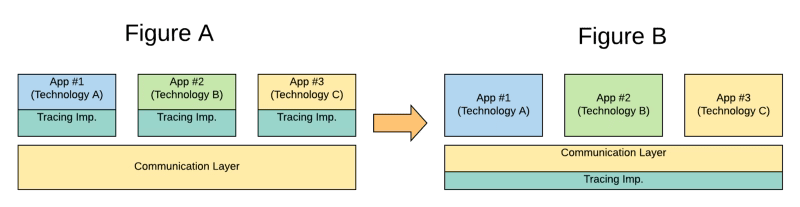
As Service Mesh is the standard way to communicate synchronously, your microservices in an east-west communication fashion covering the service-to-service communication. So, if you’re able to include in that component also the tracing capability, you can have an end-to-end tracing without needed to implement anything in each of the different technologies that you can use to implement the logic that you need, so, you’ve been changing from Figure A to Figure B in the picture below:

Observability in a Polyglot Microservice Ecosystem
In-App Tracing logic implementation vs. Service Mesh Tracing Support

And that what most of the Service Mesh technologies are doing. For example, Istio, as one of the default choices when it comes to Service Mesh, includes an implementation of the OpenTracing standard that allows integration with any tool that supports the standard to be able to collect all the tracing information for any technology that is used to communicate across the mesh.

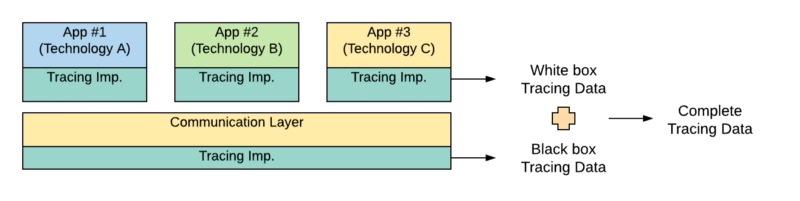
So, that mind-change allows us to easily integrates different technologies without needed any exceptional support of those standards for any specific technology. Does that mean that the implementation of those standards for those technologies is not required? Not at all, that is still relevant, because the ones that also support those standards can provide even more insights. After all, the Service Mesh only knows part of the information that is the flow that’s happening outside of each technology. It’s something similar to a black-box approach. But also adding the support for each technology to the same standard provides an additional white-box approach as you can see graphically in the image below:

Observability in a Polyglot Microservice Ecosystem
Merging White Box Tracing Data and Black Box Tracing Data

We already talked about the compliance of some technologies with the OpenTracing standard like TIBCO BusinessWorks Container Edition that you can remember it here:

[visual-link-preview encoded=”eyJ0eXBlIjoiaW50ZXJuYWwiLCJwb3N0IjoxMTcsInBvc3RfbGFiZWwiOiJQb3N0IDExNyAtIE9wZW5UcmFjaW5nIHN1cHBvcnQgaW4gVElCQ08gQnVzaW5lc3NXb3JrcyBDb250YWluZXIgRWRpdGlvbiIsInVybCI6IiIsImltYWdlX2lkIjoyNjkyLCJpbWFnZV91cmwiOiJodHRwOi8vYWxleGFuZHJlLXZhenF1ZXouY29tL3dwLWNvbnRlbnQvdXBsb2Fkcy8yMDIyLzAxL2ltZ182MWVkMTQzNTVkZjU4LmpwZyIsInRpdGxlIjoiT3BlblRyYWNpbmcgc3VwcG9ydCBpbiBUSUJDTyBCdXNpbmVzc1dvcmtzIENvbnRhaW5lciBFZGl0aW9uIiwic3VtbWFyeSI6IlRoZSBwYXN0IG1vbnRoIGR1cmluZyB0aGUgS3ViZUNvbiAyMDE5IEV1cm9wZSBpbiBCYXJjZWxvbmEgT3BlblRyYWNpbmcgYW5ub3VuY2VzIGl0cyBtZXJnZSB3aXRoIE9wZW5DZW5zdXMgcHJvamVjdCB0byBjcmVhdGUgYSBuZXcgc3RhbmRhcmQgbmFtZWQgT3BlblRlbGVtZXRyeSB0aGF0IGlzIGdvaW5nIHRvIGJlIGxpdmUgaW4gU2VwdGVtYmVyIDIwMTkuIFNvLCBJIHRoaW5rIHRoYXQgd291bGQgYmUgYXdlc29tZSB0byB0YWtlIGEgbG9vayBhdCB0aGUgY2FwYWJpbGl0aWVzIHJlZ2FyZGluZyBPcGVuVHJhY2luZyB3ZSBoYXZlIGF2YWlsYWJsZSBpbiBUSUJDTyBCdXNpbmVzc1dvcmtzIFsmaGVsbGlwO10iLCJ0ZW1wbGF0ZSI6InVzZV9kZWZhdWx0X2Zyb21fc2V0dGluZ3MifQ==”]

So, also, the support from these technologies of the industry standards is needed and even a competitive advantage because without needing to develop your tracing framework, you’re able to achieve a Complete Tracing Data approach additional to that is already provided by the Service Mesh level itself.